

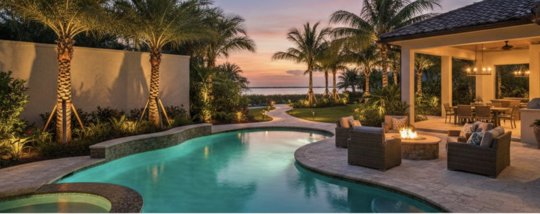
Light Your Lanai for Safer, Softer Night Swims
Good pool lighting is not just about making the water look pretty. Around Fort Myers, pools and lanais get used late into the evening, so the way the light feels on your eyes matters as much as how the space looks. Color temperature, brightness, and the shape of the beam all change how safe, calm, or harsh your pool area feels after dark.
When lighting is too bright or pointed the wrong way, the pool surface can turn into a glittery mirror that makes you squint. When it is too dim or too cool in color, steps and edges can be hard to read. In this guide, we walk through warm versus cool LEDs, smart lumen targets, and beam spread tricks made for residential pool lighting in Fort Myers, with one big goal: soft, safe, resort-style night swims.
Warm vs. Cool LEDs Around the Pool
Color temperature is how “warm” or “cool” the light looks. It is measured in Kelvin, but you do not have to remember the numbers to understand the feel.
Here is a simple way to picture it:
- Warm light, around 2700K to 3000K, looks like candlelight or a glowing sunset
- Neutral, roughly 3000K to 3500K, feels like soft morning light
- Cool, around 4000K to 5000K and higher, is closer to bright daylight
Warm LEDs create a cozy, resort-style mood. They flatter skin tones, make drinks and snacks look inviting, and help everyone relax. Many homeowners like warm light:
- Around lounge chairs and sofas
- Along the lanai perimeter
- Near outdoor TVs and seating zones
Neutral and cool LEDs give crisper visibility. They can feel more modern and help with seeing details, like where the grill handle is or where a step starts. They work well:
- At steps and pool entries
- At doors and gate areas
- Around an outdoor kitchen or bar
For a Fort Myers lanai, we usually suggest a mix. Keep the seating and hangout zones on the warmer side so the space feels comfortable and calm. Use slightly cooler or neutral light around stairs, entries, and task areas where you want that extra clarity without turning the whole space into a bright white wash.
Hitting the Right Lumen Targets for Nighttime Comfort
Lumens measure how bright a light is, not how much power it uses. With LEDs, you can get a lot of light from a small fixture, which makes it easy to go too bright without meaning to. Over-lighting is one of the biggest problems we see with residential pool lighting in Fort Myers.
Think of brightness by area and purpose instead of trying to blast light everywhere:
- Soft perimeter and lanai accent: low to moderate lumens for a gentle, even glow
- Pathways, steps, and entrances: moderate lumens, often in shielded fixtures so you see the ground, not a bright bulb
- Feature lighting: higher lumens, but focused only on palms, spa walls, waterfalls, or columns
For feature lighting especially, the goal is to light the object, not the swimmer’s eyes. That means tighter control and careful aiming so the brightest part of the beam ends on the plant or wall, not on the water.
In spring, when pool season ramps back up and evenings stay light longer, you can often use lower lumen levels and still feel safe. Good placement lets the eye relax. Thoughtful spacing around the lanai frame, screens, and pool edges keeps the scene soft, instead of blasting the whole backyard at one level.
Beam Spread Secrets to Avoid Harsh Pool Sparkle
Beam spread is how wide the light comes out of the fixture. A narrow beam is like a spotlight. A wide beam is more like a flood.
Tight beams on moving water can cause strong glitter and reflection, which some people find tiring on the eyes. When those bright points bounce off the surface, glass doors, and lanai screens, the sparkle can feel harsh instead of beautiful.
To soften the look:
- Use wider flood beams on walls, plants, and screen frames, not pointed straight at the water
- Aim lights so they graze or skim along surfaces, instead of punching straight down into the pool
- Place fixtures higher or farther back, using down-lighting that gently washes the area
Shielding and frosted lenses also help a lot inside a glass-enclosed lanai. They hide the bright “source” of the light and spread it more evenly. Indirect lighting, like bouncing light off a wall or column, gives you a soft shimmer on the pool surface without distracting hot spots that hit swimmers in the face when they lift their heads.
Designing a Balanced Lanai Lighting Layer
The best pool areas use layers of light, each with its own job. When these layers work together, your lanai feels calm, safe, and interesting.
Think in three simple layers:
- Ambient lighting, the general glow that sets the mood
- Task lighting, the brighter light for jobs like grilling or walking stairs
- Accent lighting, the extra touch that makes palms, screens, or water features stand out
For ambient light, we like warm color temperatures, wide beams, and gentle levels. This could be ceiling lights, wall lights, or soft floods aimed toward screens or stucco. The idea is to give the whole lanai a relaxing background glow.
Task lighting works better slightly cooler and a bit more focused. That might be over the grill, work surfaces in the outdoor kitchen, or along steps. Here, clarity beats mood, but you still do not want to blind anyone. Shielding and tight aiming keep the light where it is needed.
Accent lighting should be controlled and artistic. You might:
- Uplight palms and landscaping with medium beams that stop before the water
- Highlight columns or architectural details so they frame the pool area
- Add gentle lighting to a waterfall or sheer descent without aiming straight across the pool
Reflections from screens, glossy tile, and windows matter too. Careful aiming and dimmable fixtures let you adjust brightness so your space looks rich and layered, without sending glare into your windows or toward neighbors.
Fort Myers Pool Lighting Tips by Season and Weather
Our local climate shapes how pool lighting needs to work over the year. Spring and summer bring longer days, more evening pool time, and plenty of humidity and insects. Warmer, dimmer evening settings can feel more relaxing when there is still a little natural light in the sky. Smart controls or multiple zones make it easy to keep things soft at first, then gently raise levels as it gets fully dark.
In fall and winter, the sun sets earlier and people often move their swim time closer to early evening. Slightly brighter, crisper lighting can help the space feel active and welcoming when the sky is dark. Neutral tones around entries and gathering spots help guests see steps and surfaces clearly as they move between indoors and out.
Because Fort Myers is coastal, pool and lanai lighting also has to stand up to salt air, storms, and strong sun. Marine-grade materials, proper IP ratings, and professional installation go a long way toward keeping fixtures working, connections safe, and light levels consistent over time. Thoughtful design up front, paired with the right equipment, keeps your pool area feeling like a resort, night after night.