


Landscape Lighting Ideas to Boost Curb Appeal and Outdoor Safety

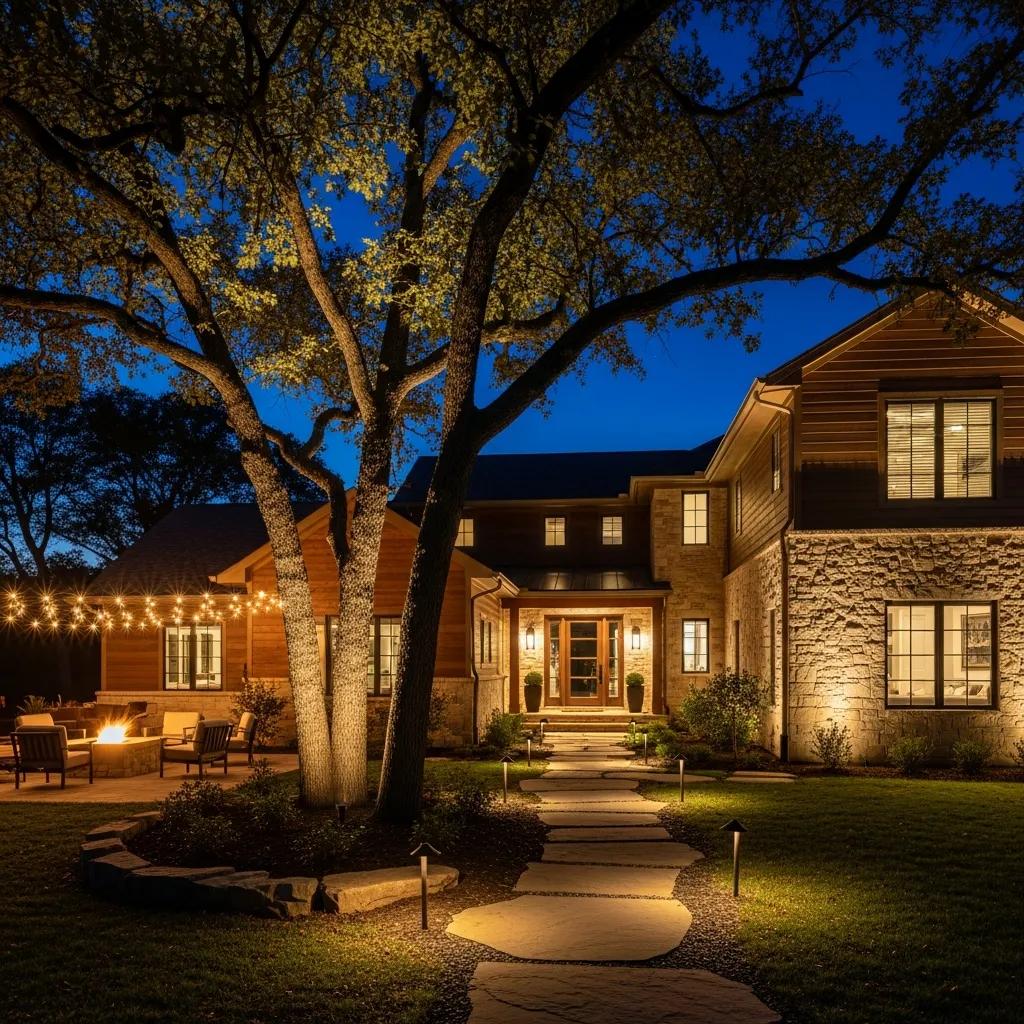
Landscape lighting transforms how a home presents itself after dark by combining aesthetic enhancement with practical safety improvements. This guide explains how strategic exterior lighting—using techniques like uplighting, pathway illumination, and accent fixtures—boosts curb appeal while reducing accidents and deterring unwanted activity. Homeowners will learn which lighting techniques work best for different features, how to choose fixtures and technologies, and practical design steps for a custom plan that balances beauty, safety, and energy efficiency. The article covers architectural and garden lighting techniques, safety and security strategies, fixture and technology comparisons, a step-by-step design approach, high-impact idea lists, and energy-smart control options to implement today. Throughout, expect clear examples, comparison tables, and actionable checklists to help plan and prioritize outdoor lighting investments.
How Can Landscape Lighting Enhance Your Home’s Curb Appeal?
Landscape lighting enhances curb appeal by emphasizing architectural lines, textural materials, and specimen plants to shape first impressions and evening usability of outdoor spaces. When used deliberately, techniques such as uplighting and wall-washing make façades read larger and more inviting, while accent illumination brings focal points forward and adds perceived value. Effective exterior architectural lighting balances brightness, color temperature, and layering to create depth and rhythm across a property. Next, we explore the specific architectural techniques that yield the most dramatic and tasteful results for homes of varied styles.
Landscape lighting techniques that improve curb appeal include:
Uplighting to emphasize columns, trees, and masonry features with narrow-beam fixtures that add vertical drama.
Wall-washing to create even illumination across broad façades for a soft, elegant look.
Silhouetting to backlight objects and reveal distinctive outlines against darker backgrounds.
Grazing to reveal texture on stone, brick, and stucco surfaces for tactile interest.
These approaches work together by creating foreground, midground, and background layers of light that guide the eye and define a property’s character. The next section explains each architectural technique in detail and offers placement tips to avoid glare and light trespass.
What Are the Best Architectural Lighting Techniques for Homes?
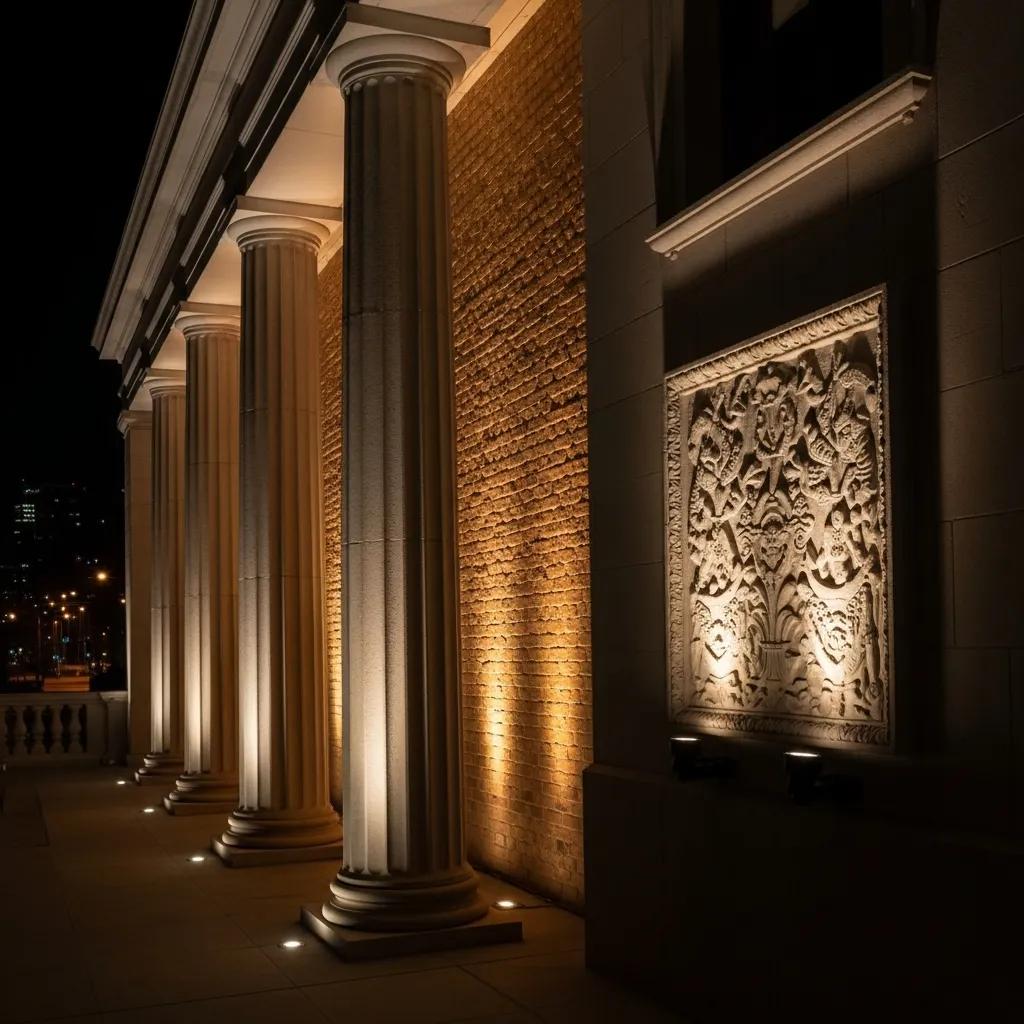

Uplighting highlights vertical elements by placing fixtures low and angling beams upward to reveal columns, tall trees, and textured façades; this technique improves perceived height and prominence. Wall-washing produces a gentle, even glow by positioning linear or adjustable fixtures at a moderate distance from walls, which reduces harsh shadows and accentuates architectural lines. Grazing places fixtures close to rough surfaces so light skims across textures, making stone and brick read with greater dimensionality at night. When applying these methods, control glare by selecting narrow-beam optics and shielding fixtures, and choose warm color temperatures (2700K to 3000K) to keep illumination inviting rather than clinical. Understanding these distinctions makes it easier to match technique to material and desired visual outcome.
How Does Garden Lighting Design Create Ambiance and Highlight Features?
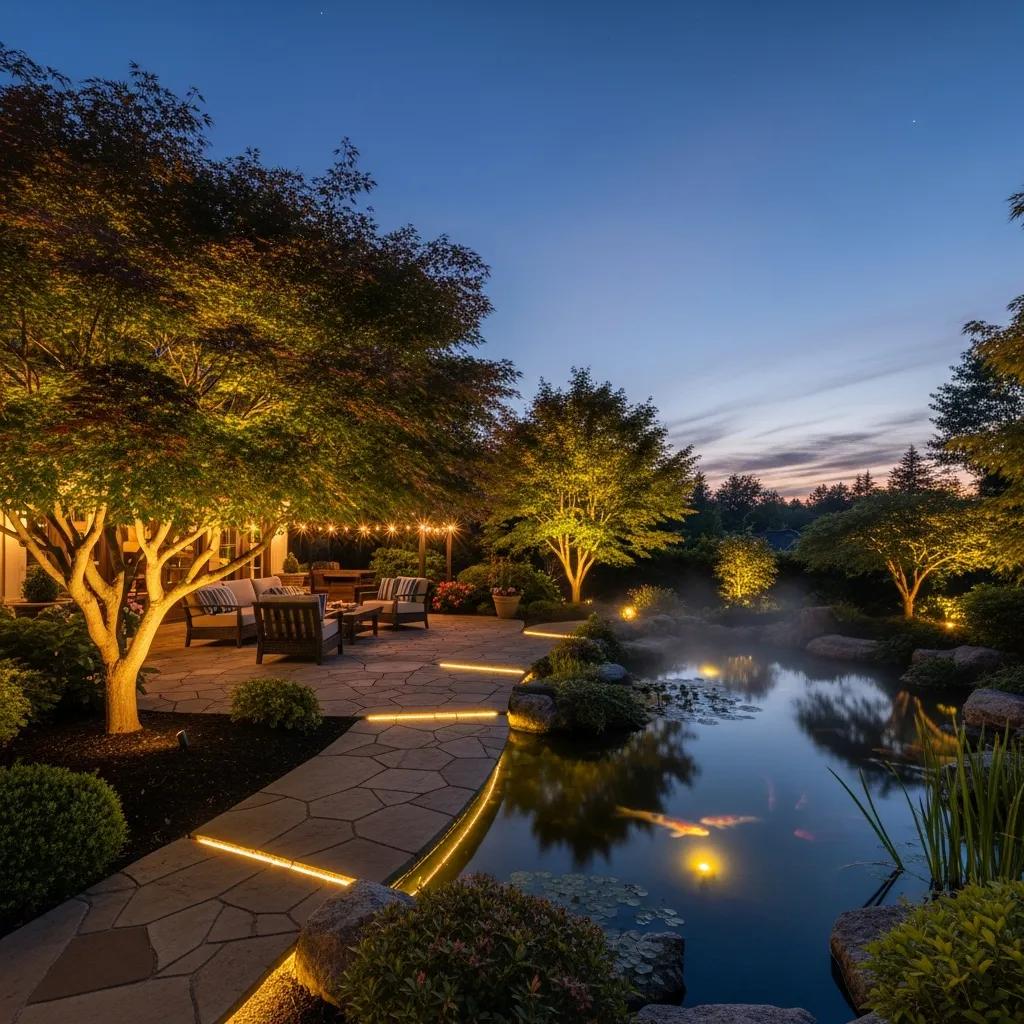
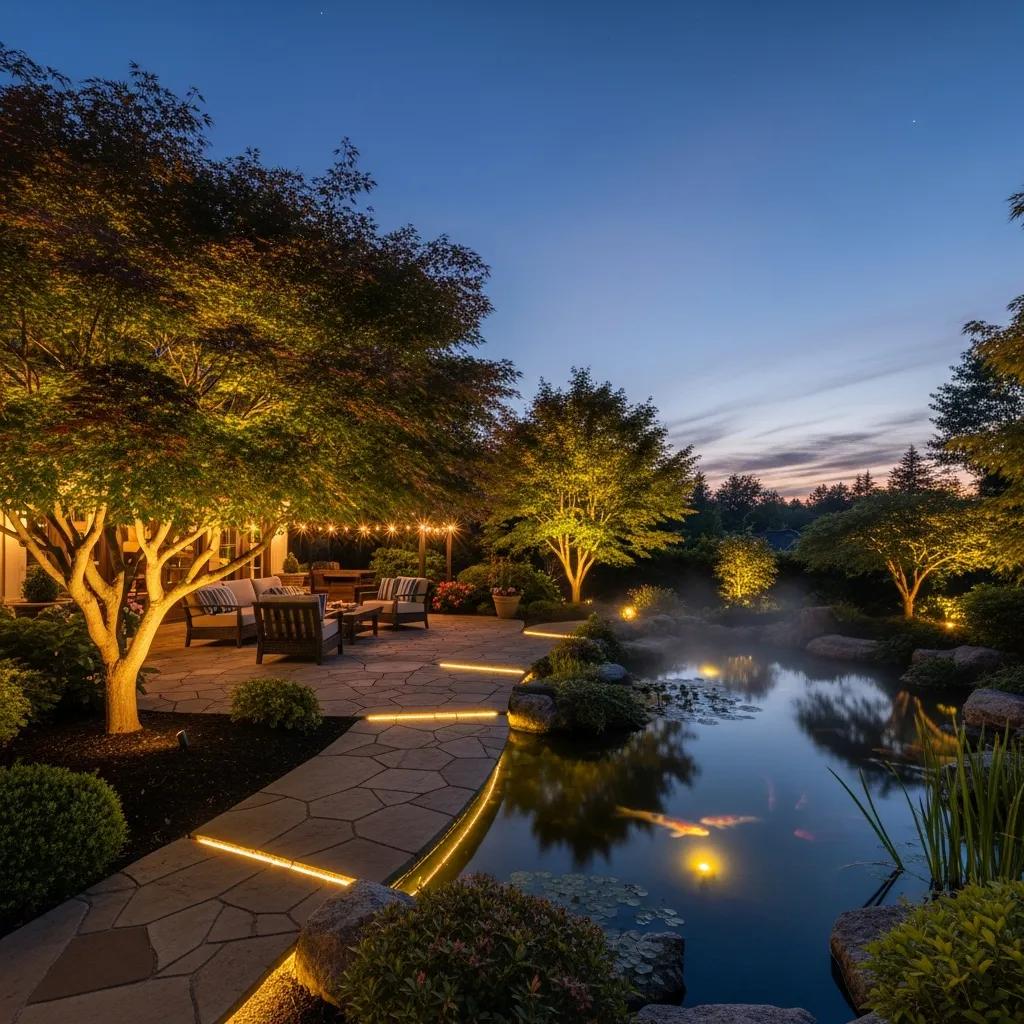
Garden lighting shapes mood and emphasizes plantings and water features through a mix of accent, ambient, and focal illumination that creates depth and safe circulation. Accent fixtures such as small spotlights define specimen trees and sculptures, while soft ambient fixtures on patios and seating areas encourage evening use and socializing. Layering—foreground path lights, midground accents, and background uplights—creates spatial separation and visual hierarchy that makes landscapes feel larger and more intentional. Choose warmer color temperatures for most plantings to flatter foliage and use higher CRI fixtures (80 or above) where accurate color rendering matters for flower beds or water reflections; these choices enhance ambiance while preserving plant health and visual richness.
What Outdoor Lighting Solutions Improve Safety and Security?
Outdoor lighting improves safety and security by increasing visibility for movement, eliminating trip hazards, and creating sightlines that deter potential intruders. The right combination of pathway illumination, motion-activated fixtures, and layered perimeter lighting reduces blind spots and supports effective surveillance without creating glare. Implementing dusk-to-dawn controls and properly aimed sensors optimizes energy use while ensuring consistent coverage during critical hours. Below are practical strategies and a comparative table to help choose the best safety-focused lighting approach for different property zones.
Pathway, step, and perimeter safety strategies include:
Consistent pathway lighting to mark routes and reduce trips on uneven surfaces.
Motion-activated security lights to draw attention to activity while conserving energy.
Layered sightline lighting (foreground, midground, background) to avoid dark pockets and improve observational coverage.
These strategies should be implemented with attention to sensor placement, beam control, and neighbor-friendly shielding to minimize light trespass. The following table compares common security lighting approaches to clarify trade-offs and ideal use-cases.
| Strategy | Deter/Visibility Effect | Energy Implication |
|---|---|---|
| Motion-activated lighting | High when triggered; startle factor deters intruders | Low baseline energy; spikes during events |
| Dusk-to-dawn continuous lighting | Constant visibility; simplifies sightlines | Moderate energy use if LED; higher if older tech |
| Continuous floodlighting for perimeters | Very high visibility across zones; useful for large areas | High energy unless curtailed or LED-optimized |
This comparison shows motion-activated systems balance deterrence and efficiency, while continuous lighting prioritizes constant coverage. Next, we focus on specific pathway and step lighting techniques to reduce accidents.
How Does Pathway and Step Lighting Prevent Accidents?
Pathway and step lighting prevents accidents by providing even, glare-controlled illumination that makes changes in grade and surface texture visible to pedestrians. Use low-level path lights and recessed step lights to define routes without producing excessive uplight, and space fixtures to maintain consistent luminance—typically closer spacing on curves and stairs. Choose fixtures with cutoff optics and warm color temperatures (2700K-3000K) to preserve night vision while clearly differentiating surfaces. Regular maintenance—cleaning lenses and trimming vegetation—ensures fixtures remain effective over time and prevents shadowing that could cause trips or falls.
What Are Effective Security Lighting Strategies for Homes?
Effective security lighting strategies combine sensor-based activation with layered lighting to maximize detection and minimize nuisance illumination. Motion sensors should be placed to cover likely approach vectors—driveways, side gates, and rear access—angled downward to avoid skyward glare and false triggers from street traffic. Integrating low-level ambient lighting with targeted motion-triggered highlights provides constant orientation while reserving bright illumination for confirmed events. Balance deterrence with community considerations by shielding fixtures and limiting spill onto neighboring properties; this retains safety benefits without creating complaints or light pollution.
Which Types of Landscape Lighting Fixtures Are Best for Your Home?
Choosing the right fixtures depends on the intended use: focused highlighting, broad area illumination, or safe navigation. Spotlights provide narrow, intense beams for accenting features; floodlights create wide-area coverage for driveways and yards; path lights offer low-level guidance for walkways. Selection criteria should also include lumens (not watts), beam angle, IP rating for wet locations, and color temperature to ensure durability and the desired visual effect. Below is a comparison table that outlines common fixture types, their best uses, typical lumen ranges, installation method, and pros/cons to guide selection.
| Fixture Type | Best Use | Typical Lumen Output | Installation Method | Pros / Cons |
|---|---|---|---|---|
| Spotlight | Uplighting trees, statues | 300–1,000 lm | Mounted on stake or surface | Precise highlighting; risk of glare if mis-aimed |
| Floodlight | Driveways, large yards | 1,000–4,000 lm | Wall- or pole-mounted | Broad coverage; can be harsh if unshielded |
| Path light | Walkways, garden edges | 50–300 lm | Low-voltage stake or recessed | Guides traffic; low glare, limited range |
| Step light | Stair treads, deck edges | 50–200 lm | Recessed into riser or surface | Reduces trip hazards; requires careful placement |
This fixture comparison clarifies trade-offs and shows why mixing fixtures yields the best functional and aesthetic result. Next, we look at practical usage scenarios that pair fixture types to common landscape needs.
Spotlights excel at defining specimen trees and sculptures by producing narrow, controlled beams.
Floodlights are most effective where broad, uniform illumination is required for safety or activity.
Path lights provide consistent navigation cues and should be chosen with low-profile designs to avoid obstruction.
These example pairings help avoid over-lighting by matching fixture output and optics to specific tasks. The following subsection compares LED, solar, and smart technologies and their appropriateness for different installations, with a brief note on luxury LED benefits for homeowners seeking energy-efficient aesthetics.
What Are the Uses of Spotlights, Floodlights, and Path Lights?
Spotlights are ideal for directed accentuation of vertical elements like trunks and columns, requiring narrow beams and precise angling to avoid glare. Floodlights suit driveways and yard areas needing broad spill and safety coverage; they should be shielded or controlled to prevent neighbor disturbance. Path lights mark circulation routes with gentle illumination and are best spaced to maintain visual continuity without becoming bright focal points. Correct mounting height and beam selection prevent over-lighting and ensure each fixture supports the wider design intent rather than competing with it.
How Do LED, Solar, and Smart Lighting Technologies Compare?
LED fixtures deliver high efficiency, long life, and excellent color rendering, making them the preferred choice for luxury-looking, energy-efficient installations; they reduce operating costs and maintenance needs. Solar lighting offers low-install cost and independence from wiring but depends on site solar exposure and often produces lower lumen output and less consistent run-times. Smart-enabled systems add programmable scheduling, remote control, and scene-setting that enhance convenience and security, though they require compatible controllers and robust network planning. Mixing technologies can work when the designer accounts for reliability and control integration, favoring LED as the consistent backbone for primary illumination.
LED Light Sources for Landscape Lighting Development DEVELOPMENT OF LED LIGHT SOURCES IN LANDSCAPE LIGHTING. DEVELOPMENT OF LED LIGHT SOURCES IN LANDSCAPE LIGHTING., 2018
How Can You Design a Custom Landscape Lighting Plan for Maximum Impact?
Designing a custom landscape lighting plan starts with clear goals—whether enhancing curb appeal, improving safety, or creating entertaining spaces—and proceeds through site assessment, zoning, fixture selection, and control strategy. A methodical approach maps focal points, pedestrian routes, and service areas, then assigns techniques (uplighting, grazing, path lights) and technologies that support each zone’s function. Simulation and visualization help predict outcomes and refine fixture placement so that layers of light interact harmoniously rather than competing. After establishing a concept, plan for installation logistics—wiring, transformer sizing, and maintenance access—to ensure the finished system performs reliably.
A stepwise checklist for custom design:
Define objectives: curb impact, safety, or ambiance and rank priorities.
Survey the site: note sightlines, plant heights, architectural features, and power availability.
Zone the landscape: allocate focal points, circulation paths, and utility areas for tailored treatments.
This checklist leads naturally to professional design benefits and when to seek expert help for complex properties.
Professionals deliver design coherence, code-compliant wiring solutions, and long-term maintenance planning that DIY approaches often miss. They can model scenes and refine fixture angles to minimize glare and light pollution while maximizing visual impact. For homeowners seeking an easier path from concept to install, some providers offer visualization tools, free consultations, and post-installation guarantees that reduce uncertainty and make the design-to-installation transition smoother. The next subsection explains the measurable advantages of hiring a professional and when a homeowner might opt to do it themselves.
What Are the Benefits of Professional Custom Lighting Design?
Professional designers yield a cohesive plan that balances aesthetics, safety, and energy performance by selecting appropriate fixtures, optics, and control strategies for each zone. They handle technical issues—wiring runs, transformer sizing, IP-rated fixtures for wet locations, and compliance with local codes—that impact system longevity and reliability. Designers also optimize lumen levels and beam aiming to avoid glare and light trespass, improving neighbor relations and reducing wasted energy. Finally, professionals can offer visualization and staging so homeowners see expected outcomes before installation, saving time and reducing costly adjustments later.
How Does Blingle Ensure a Worry-Free Installation and Support?
Blingle provides a client-focused process that combines visualization tools, personalized design consultations, and ongoing installation support to simplify decision-making for homeowners. Their emphasis on luxury LED solutions and a worry-free guarantee can be useful for those prioritizing energy efficiency and ongoing support.
Blingle also provides free consultations and visualization tools that help homeowners preview designs and refine fixture choices before installation. These services reduce uncertainty by translating design intent into visual mockups and clear plans, supporting confident decision-making.
For a consultation or to view portfolio examples and visualization demos, consider contacting Blingle to discuss goals and scheduling options.
What Are the Top Outdoor Lighting Ideas to Boost Curb Appeal?
High-impact lighting ideas focus on entryways, façades, specimen trees, water features, and pathways to create memorable night-time presentation. Small, well-placed accents combined with consistent pathway markers cultivate a sense of arrival and guide visitors safely to the front door. Seasonal and event lighting—such as temporary uplighting for holidays or warm string lights for gatherings—adds flexibility so exteriors can shift between everyday elegance and festive ambiance. Below is a ranked list of priority zones and why each area contributes disproportionately to perceived value and welcoming character.
Which areas to prioritize for visual impact:
Entryway and porch: Directly influences first impressions; use layered lights to highlight the door, house numbers, and steps.
Pathways and driveway: Guides visitors and prevents trips; consistent low-level lighting defines safe routes.
Specimen trees and landscaping: Adds drama and scale when uplighted, increasing depth and focal interest.
Facade and architectural accents: Wall-washing or grazing reveals materials and enhances perceived property size.
Water features and pools: Reflections and controlled color enhance drama and luxury feel.
Prioritizing these zones produces the greatest curb impact per fixture installed and supports both aesthetic and functional goals. The next subsection explains string lights and decorative accents for patios and entertaining areas.
Which Areas Should You Illuminate for Maximum Visual Impact?
Illuminate the approach path and entry first to ensure safety and a strong first impression, then layer midground accents such as specimen trees to add scale and drama. Lighting the façade after focal points ties the overall composition together and clarifies the home’s architectural rhythm. Pools, fountains, and other water features provide reflective highlights that amplify surrounding illumination and create dynamic nighttime visuals. This order prioritizes function and impact so budget and fixture choices deliver the highest perceived value.
How Can String Lights and Accent Lighting Add Charm and Warmth?
String lights and bistro-style accents create intimate overhead layers suited to patios, pergolas, and outdoor dining areas, supporting social use after dark. Use warm white bulbs and even spacing to produce a canopy effect; secure mounting points and safe power sources are essential for durability and safety. Combine decorative lighting with low-level accent fixtures to preserve visual depth and avoid flattening the scene into a single plane. For safety, choose outdoor-rated string fixtures or hardwired decorative fixtures with appropriate IP ratings and protected connections.
How Do Energy-Efficient and Smart Landscape Lighting Systems Enhance Your Outdoor Space?
Energy-efficient fixtures and smart controls increase convenience, lower operating costs, and improve security through automated schedules and sensor-driven responses. LEDs reduce energy consumption and maintenance frequency, smart controllers enable scenes and remote management, and sustainable strategies cut whole-life costs while supporting environmental goals. Integrating these technologies thoughtfully—from transformer sizing to network bridges—ensures consistent performance and user-friendly operation. The table below compares LED, solar, and smart systems to highlight their strengths, limitations, and best-use scenarios.
| Technology | Energy Use | Cost Considerations | Control Options |
|---|---|---|---|
| LED (wired low-voltage) | Low | Higher upfront, lower lifecycle cost | Dim, schedule, scene-capable with controllers |
| Solar | Very low operational | Low install cost; variable reliability | Basic timers or on-panel sensors; limited control |
| Smart-enabled systems | Low with LEDs | Added upfront for controllers; flexible | Remote app control, scheduling, geofencing, scenes |
This comparison shows LEDs as the long-term efficiency backbone, solar as useful for low-power accenting in sunny sites, and smart controls as the convenience and security layer that multiplies system value. Next, we examine LED advantages and selection criteria.
Energy-efficient and smart systems deliver measurable benefits:
Reduced energy bills and maintenance needs from LED efficiency and lifespan.
Greater convenience and security through scheduling, remote access, and integration with sensors.
Sustainability gains by lowering lifetime energy consumption and enabling precise control.
These benefits combine to make a strong economic and functional case for modern landscape lighting investments.
What Are the Advantages of LED Landscape Lighting?
LED landscape lighting offers major energy savings and longer operational lifespans compared with traditional halogen or incandescent sources, reducing replacement frequency and labor. LEDs provide directional light that enhances optical control, higher color rendering indices for authentic colors, and a range of warm-to-neutral color temperatures suited for landscaping. Look for fixtures with appropriate IP ratings for wet locations and good thermal management to preserve lumen output over time. Recent research and industry guidance emphasize LEDs for superior lifetime value when correctly specified and installed.
How Can Smart Lighting Systems Improve Convenience and Security?
Smart lighting systems enable scheduled scenes, remote control, and event-triggered responses that make outdoor lighting easier to manage and more effective for security. Scheduling and geofencing let homeowners automatically adjust lighting based on presence or time, while motion-triggered scenes can alert occupants and record events when integrated with cameras or home automation. Choose systems that use secure protocols and reliable bridges to avoid connectivity gaps, and plan fallback schedules to maintain basic operation if network components fail. Thoughtful integration yields both convenience and demonstrable gains in deterrence and monitoring capability.
For homeowners ready to explore professional options, Blingle offers visualization and consultation services that demonstrate design outcomes and simplify the decision process. Their emphasis on luxury LED solutions and a worry-free guarantee can be useful for those prioritizing energy efficiency and ongoing support.
Blingle also provides free consultations and visualization tools that help homeowners preview designs and refine fixture choices before installation. These services reduce uncertainty by translating design intent into visual mockups and clear plans, supporting confident decision-making.
For a consultation or to view portfolio examples and visualization demos, consider contacting Blingle to discuss goals and scheduling options.
Frequently Asked Questions
What are the key factors to consider when selecting landscape lighting fixtures?
When selecting landscape lighting fixtures, consider the intended use, such as accentuation or area illumination. Evaluate the lumen output, which indicates brightness, and the beam angle to ensure the light spreads appropriately. Additionally, check the IP rating for weather resistance, especially for outdoor installations. Color temperature is also crucial; warmer tones (2700K-3000K) are generally more inviting. Lastly, think about the installation method—whether fixtures will be mounted, staked, or recessed—and how they will integrate with your overall design.
How can I maintain my landscape lighting system for optimal performance?
Regular maintenance is essential for keeping your landscape lighting system functioning effectively. Start by cleaning the fixtures to remove dirt and debris that can block light output. Check for any damaged wiring or fixtures and replace them as needed. Trim back any vegetation that may obstruct light paths. Additionally, inspect and adjust the angles of fixtures to ensure they are still highlighting the intended features. Finally, consider scheduling a professional check-up annually to address any technical issues and ensure everything is operating efficiently.
What are the benefits of using smart lighting controls in landscape lighting?
Smart lighting controls offer numerous benefits for landscape lighting, including enhanced convenience and security. Homeowners can schedule lighting to turn on and off automatically, adjust brightness levels, and create customized scenes for different occasions. Remote access via smartphone apps allows for real-time control, even when away from home. Additionally, smart systems can integrate with motion sensors to provide alerts and activate lights when movement is detected, enhancing security. This technology not only improves usability but can also lead to energy savings through optimized usage.
How do I choose the right color temperature for my landscape lighting?
Choosing the right color temperature for landscape lighting is crucial for achieving the desired ambiance. Warmer color temperatures (2700K-3000K) create a cozy and inviting atmosphere, making them ideal for residential settings. These tones enhance the natural colors of plants and materials, promoting a harmonious look. Cooler temperatures (above 3000K) can be used for modern designs or security lighting, as they provide a brighter, more clinical feel. Consider the overall design theme and the specific areas being illuminated to select the most suitable color temperature.
What are some creative ways to use landscape lighting for special occasions?
Landscape lighting can be creatively used for special occasions by incorporating temporary lighting solutions that enhance the atmosphere. For events like weddings or parties, string lights can be draped over patios or trees to create a magical ambiance. Uplighting can highlight key features such as trees or architectural elements, adding drama to the setting. Additionally, colored LED lights can be used to match event themes or holidays, providing a festive touch. Consider using portable fixtures or battery-operated options for flexibility and ease of setup.
How can I ensure my landscape lighting is energy-efficient?
To ensure your landscape lighting is energy-efficient, start by selecting LED fixtures, which consume significantly less energy than traditional bulbs and have a longer lifespan. Incorporate smart controls that allow for scheduling and dimming, reducing energy use during off-peak hours. Use motion sensors to activate lights only when needed, minimizing unnecessary usage. Additionally, consider solar-powered options for areas with ample sunlight, as they require no wiring and have low operational costs. Regular maintenance also helps keep fixtures operating efficiently, further enhancing energy savings.
Conclusion
Implementing effective landscape lighting not only enhances your home's curb appeal but also significantly improves safety and security for your outdoor spaces. By utilizing techniques such as uplighting, pathway illumination, and smart controls, homeowners can create a welcoming atmosphere while deterring potential intruders. Investing in quality fixtures and professional design services ensures a cohesive and functional lighting plan tailored to your needs. For personalized guidance and to explore our premium lighting solutions, consider reaching out for a consultation today.