


Outdoor Lighting Ideas for Front & Back Yards: The Ultimate 2026 Guide to Enhance Ambiance, Safety, and Curb Appeal

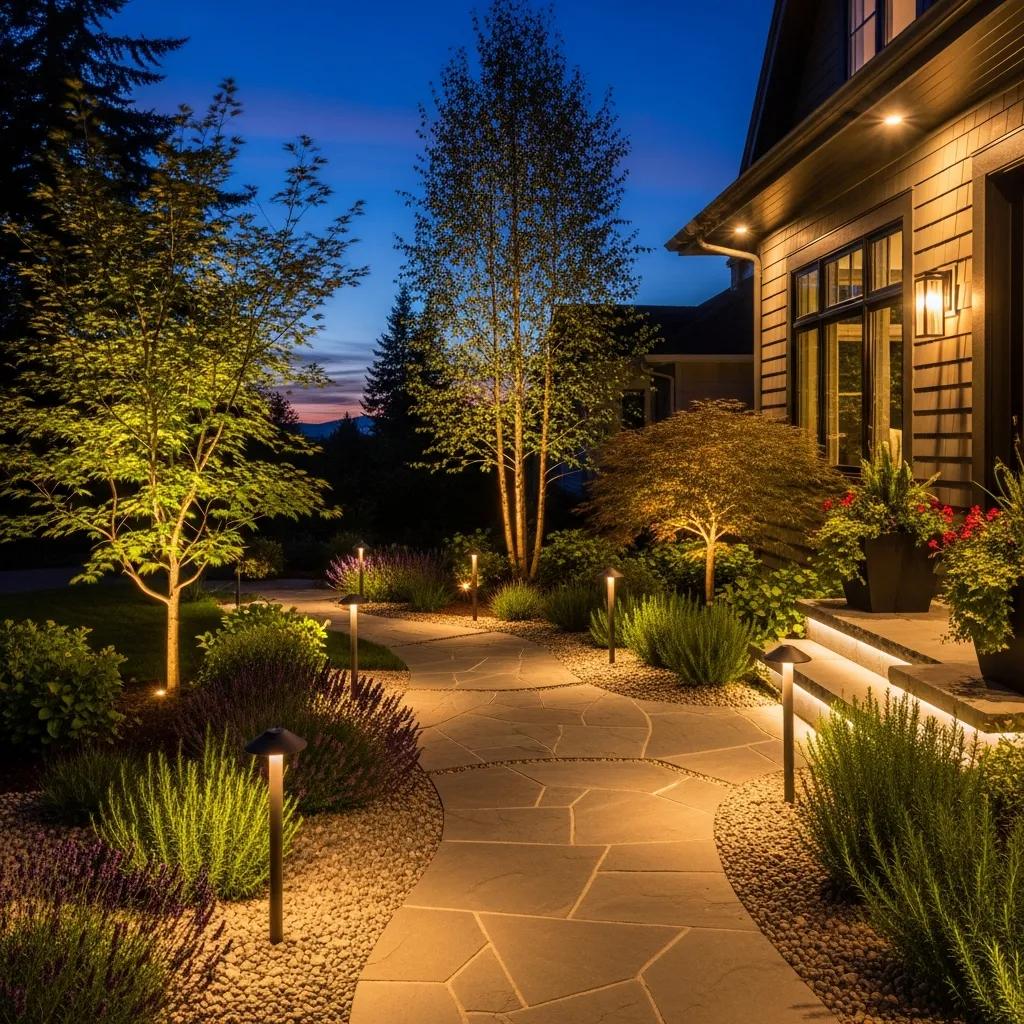
Outdoor lighting ideas for 2026 balance energy-efficient LED technology, smart controls, and layered design to create attractive, safe, and usable front and back yards. This guide explains why layered lighting—combining ambient, task, and accent fixtures—works, highlights current trends like luxury LEDs and integrated smart systems, and maps practical ideas to common yard features. Homeowners seeking better curb appeal, safer pathways, or a backyard oasis will find step-by-step placement tips, fixture recommendations, and control strategies that fit modern homes. The article covers front-yard focal points, backyard living zones, top lighting types and comparisons, safety and security approaches, seasonal/event solutions, and how a professional provider can turn ideas into turnkey installations. Read on for lists, comparison tables, and concise how-to checklists that make choosing and implementing outdoor lighting in 2026 straightforward and design-forward.
What Are the Best Outdoor Lighting Ideas for Front Yards in 2026?
Front-yard lighting in 2026 focuses on welcoming curb appeal, clear sightlines, and subtle drama by using layered fixtures and efficient LEDs. Good front-yard design starts with functional pathway illumination, then adds focal uplighting for architecture and soft sconces at entries to balance safety with warmth. Modern approaches favor low-glare optics, warm color temperatures for residential facades, and smart scheduling to reduce light pollution while maintaining presence after dusk. These methods not only improve curb appeal but also support security and wayfinding for guests and delivery personnel. The next subsection details pathway lighting specifics, which shows how fixture choice and spacing deliver safety and visual rhythm.
Front yards often benefit from a set of practical, high-impact ideas that are easy to implement.
Pathway lighting: Low-voltage or solar fixtures placed at consistent spacing define walkways and reduce trip hazards.
Architectural uplighting: Narrow-beam uplights highlight columns, textures, and tree trunks to add vertical interest.
Entryway sconces: Wall-mounted fixtures flanking doors provide welcoming light and clear sightlines.
Accent tree lighting: Carefully placed spotlights create depth and seasonal interest without overpowering façade lighting.
How Can Pathway Lighting Improve Safety and Curb Appeal?
Pathway lighting defines circulation and reduces trip hazards by casting low, even light across walking surfaces, typically using fixtures with shielded optics to avoid glare. Proper spacing usually follows a rule of thumb—fixtures every 3–6 feet for narrow paths and every 6–8 feet for wider walks—so the illumination overlaps without creating bright spots. Choosing between low-voltage and solar pathway lights depends on site conditions: low-voltage offers consistent output and integration with transformers, while modern solar units suit small jobs with minimal trenching. Materials and IP ratings matter for longevity; fixtures rated IP65 resist common outdoor conditions and preserve finish. Understanding spacing and power leads naturally into techniques for highlighting larger front-yard features through uplighting.
What Architectural Uplighting Techniques Highlight Front Yard Features?
Architectural uplighting uses controlled beam angles and fixture placement to reveal columns, stone textures, and tree canopies by casting light upward at calibrated angles for dramatic yet natural effects. Narrow-beam fixtures (10°–25°) produce focused shafts that accentuate architectural lines, while wider beams (30°–60°) soften textures for a gentler wash on facades; matching beam spread to the target size prevents hot spots. Select warm white LEDs (2700K–3000K) for most residential facades to maintain inviting color rendering and avoid harsh cool tones that can feel institutional. Aim fixtures 1–3 feet from the base of features for trees and 3–6 feet from building walls for columns, and use adjustable heads to fine-tune angles after installation. These uplighting techniques pair well with pathway illumination and entry lighting to create balanced curb appeal.
Evaluating White LEDs for Outdoor Landscape Lighting Performance The paper evaluates the performance of white LEDs for outdoor landscape lighting applications. It discusses the selection of light sources and the design of lighting systems, considering factors like color temperature. The study compares different white LEDs with various correlated color temperatures (CCTs), including 3050K, and RGB 5800K, to assess their suitability for landscape lighting. Evaluating white LEDs for outdoor landscape lighting application, 2002
How Do You Create a Backyard Oasis with Effective Outdoor Lighting?
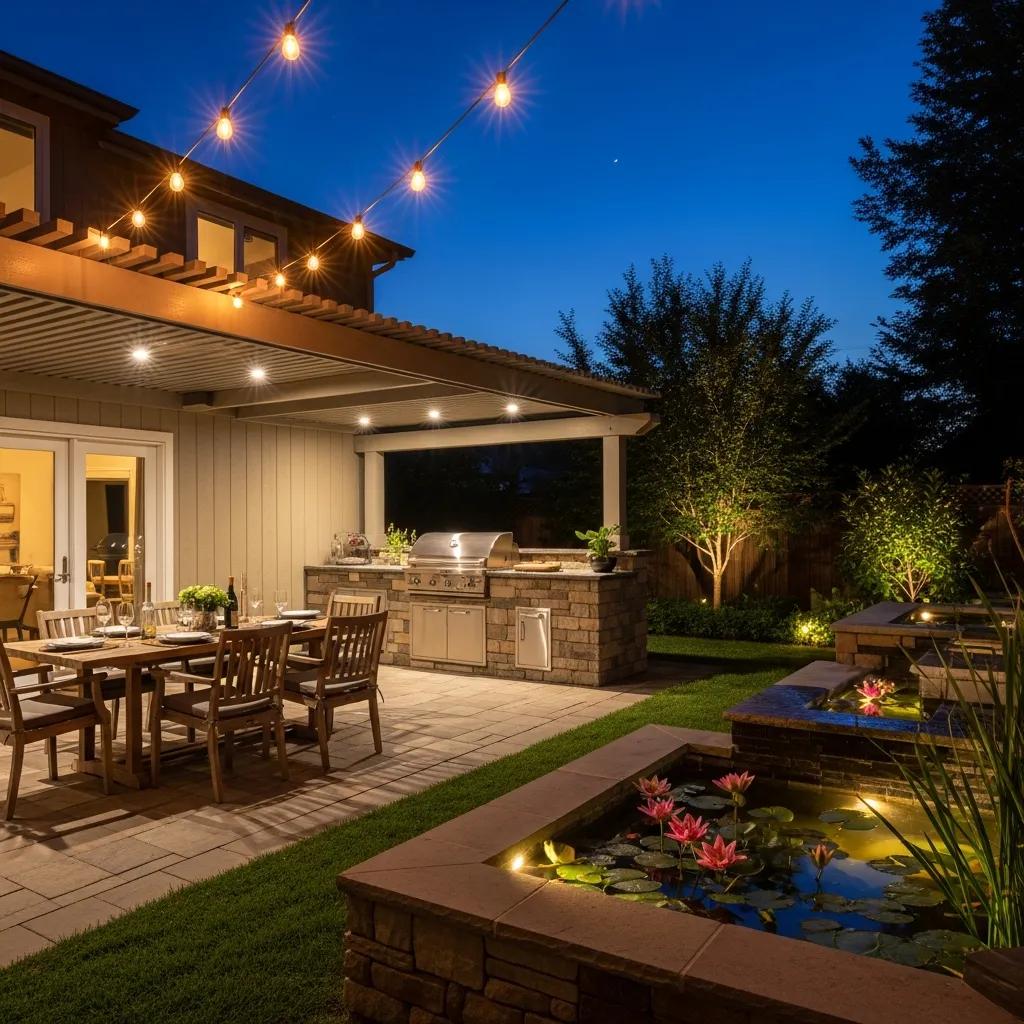

Creating a backyard oasis relies on layering light into ambient, task, and accent zones so each area—from dining to lounging to gardens—has appropriate illumination and atmosphere. The design mechanism is simple: ambient light establishes overall visibility, task lighting supports cooking or reading, and accent lighting draws the eye to focal points like a specimen tree or water feature. Effective backyard plans use dimmable LEDs, scene presets, and localized controls so homeowners can switch between lively party modes and calm evening scenes. Begin by identifying zones and power access, then choose fixtures that match weather exposure and desired visual warmth. The following section drills into patio and deck solutions that form the backbone of many backyard living spaces.
Backyards benefit from a compact checklist to ensure layered lighting addresses function and mood.
Map zones: Identify dining, cooking, circulation, and accent areas before specifying fixtures.
Choose sources: Use string lights, recessed deck lights, and sconces for layered ambiance.
Control strategy: Incorporate dimmers, presets, and timers to adapt scenes for different evenings.
Which Patio and Deck Lighting Ideas Enhance Outdoor Living Spaces?
Patio and deck lighting combines overhead string or bistro lights for convivial ambiance with recessed deck and step lights for safety and subtle patterning underfoot. String lights create instant atmosphere and are ideal for dining or lounge areas, while recessed deck lights and rail-mounted fixtures define edges and prevent trips on steps without adding glare. Material selection and IP ratings matter—select fixtures with sealed housings and corrosion-resistant finishes where moisture and salt are concerns. For flexible control, pair dimmable LED fixtures with smart dimmers or scene controllers to tailor brightness for dining, games, or quiet evenings; this preserves energy while improving usability. After choosing patio fixtures, garden and pool lighting add depth and accentuation to the backyard composition.
How Can Garden and Pool Lighting Add Ambiance and Functionality?
Garden and pool lighting amplifies texture and movement—spotlights on specimen plants create layered plant silhouettes, well lights provide safe ground-level accents, and underwater LEDs highlight pool contours and water motion. Pool lighting must meet waterproof and electrical safety standards (IP68 and appropriate low-voltage systems) to ensure safe long-term operation, and fixture color and intensity should balance with surrounding garden tones to avoid harsh contrasts. Accent fixtures with adjustable beam angles work well for highlighting foliage without washing out adjacent spaces, and warmer color temperatures in planting beds preserve natural hues at night. Thoughtful garden and pool lighting extends usable hours and creates visual anchors that integrate with patio and pathway layers.
Lighting Design Principles: Layers, Functionality, and Aesthetics This chapter explores the core principles and elements of architectural interior lighting design. A well-rounded understanding of these fundamentals is essential for creating lighting solutions that balance functionality, aesthetics, and energy efficiency. This chapter covers the lighting triangle, lighting layers, lighting quality, lighting intensity, color rendering, glare control, and energy efficiency. Section 3.2 explores lighting layers, where different types of lighting work together to fulfill specific needs. Sections 3.2.1, 3.2.2, and 3.2.3 delve into the principles of ambient lighting, task lighting, and accent lighting, each with its unique role in interior lighting design. Lighting Fundamentals and Design Principles, G Ozenen, 2023
What Are the Top Types of Outdoor Lighting to Use in Front and Back Yards?
Choosing the right lighting types requires comparing LEDs, solar fixtures, string lights, floodlights, recessed options, and sconces by energy use, durability, and control capability. Each lighting type serves specific roles: pathway lights define movement, uplights sculpt form, string lights create atmosphere, and floodlights provide wide-area coverage for security or large gatherings. Selecting fixture families should consider power source (low-voltage transformer vs. mains), IP rating for exposure, and compatibility with smart controllers for scheduling and scenes. The table below compares common lighting types and recommended use-cases to help homeowners match technology to design goals.
| Fixture Type | Best For | Power & Durability |
|---|---|---|
| Pathway lights | Walkways, curb appeal | Low-voltage or solar; IP65 recommended |
| Uplights / spotlights | Trees, facades | Low-voltage LED with narrow beams |
| String / bistro lights | Patios, dining zones | Low-voltage LED strands; weather-rated cords |
| Floodlights | Security, large areas | High-output LED; motion-capable options |
| Recessed deck lights | Steps, decking | Integrated low-voltage LED; flush installation |
Why Choose Energy-Efficient LED Landscape Lighting?
LED landscape lighting delivers long life, reduced energy use, and precise color control, making it the preferred choice for 2026 installations that prioritize sustainability and design flexibility. LEDs convert electricity into light far more efficiently than incandescent sources, reducing operating costs and enabling smaller transformers and easier integration with solar or battery-backed systems. Color temperature selection—choosing warmer 2700K–3000K tones—preserves natural appearance of plants and facades, while high-CRI LEDs render colors accurately under low light. Maintenance advantages and long lifespans mean LEDs often offset higher upfront cost through years of reliable operation, which leads naturally to exploring smart control systems that maximize LED benefits.
How Do Smart Outdoor Lighting Systems Improve Control and Convenience?
Smart outdoor lighting systems add scheduling, scene control, motion-triggered automation, and geofencing to traditional fixtures, enabling automated presence, energy savings, and tailored ambiance for different occasions. Common smart features let homeowners create presets for arrival, dinner, and party modes, incorporate motion sensors to trigger security lights, and use app-based controls for remote adjustments; integration with broader home systems increases convenience. Smart controllers can also segment lighting zones so only specific areas operate at a time, reducing energy use while keeping essential pathways lit. Understanding smart features helps decide whether to retrofit existing low-voltage systems or specify new smart-ready products during installation.
Smart Control Systems for Outdoor Lighting Infrastructure This paper presents the integration of a novel smart control system for outdoor lighting infrastructures. It discusses a typology of smart-controlling outdoor lighting systems and combines them into a complete system that responds quickly and accurately to any lighting needs. The focus is on creating intelligent and efficient outdoor lighting solutions. Integrating a novel smart control system for outdoor lighting infrastructures in ports, N Sifakis, 2021
How Can Outdoor Lighting Enhance Safety, Security, and Ambiance?
Outdoor lighting enhances safety by improving visibility, reduces crime through well-lit sightlines and motion-activated deterrents, and creates ambiance when layered thoughtfully across zones. The mechanism is layered distribution: task lights illuminate work surfaces, ambient lights ensure general visibility, and accent lights highlight potential trip hazards or aesthetic focal points. Achieving safety without glare requires limiting lumen output at eye level and using shields or visor optics on fixtures to direct light where needed. Below is a short list of recommended security lighting strategies that balance visibility with neighbor-friendly practices.
Use motion-activated flood or spot lighting to deter intruders and draw attention when movement occurs.
Illuminate primary circulation routes and steps with low-glare pathway and step lights to prevent accidents.
Combine camera-ready lighting with controlled scene levels so surveillance operates effectively without constant high-output light.
These strategies segue into a structured comparison of security fixture types and their typical coverage and control attributes.
| Security Approach | Typical Coverage | Control & Use |
|---|---|---|
| Motion-sensor floodlight | Wide area, 10–30m | Motion-triggered, high lumens for deterrence |
| Smart lights with scheduling | Perimeter & entries | App scheduling, geofencing, low standby output |
| Camera-integrated lighting | Entryways & porch | Coordinated activation with recording systems |
What Are the Best Security Lighting Options for Outdoor Spaces?
The best security lighting blends coverage, sensible lumen output, and automation so areas are illuminated only when necessary and critical sightlines remain visible to cameras and neighbors. Motion-sensor floodlights work well for driveways and wide yards where sudden illumination deters intrusion, while smart-scheduled low-output perimeter lights maintain presence without constant glare. Placement is crucial: sensors should cover approach angles rather than be triggered by passing traffic, and fixtures should avoid illuminating neighbors’ windows. Integrating security lighting with smart controls or surveillance systems creates a cohesive safety layer that preserves ambiance when high output is unnecessary.
How Does Layered Lighting Create Warmth and Depth in Outdoor Areas?
Layered lighting combines ambient fixtures for general illumination, task lights for activities, and accent fixtures for focal points to create depth and visual interest that mirrors well-considered interior lighting. A useful practical mix might allocate roughly 60% ambient illumination, 30% accent, and 10% task light to maintain balance between usability and drama; these ratios vary by space and activity needs. Dimmable LEDs and scene presets allow homeowners to shift layers for a family dinner versus a lively gathering, while accents on plants and architecture create perceived depth that enlarges outdoor rooms visually. Establishing layers inside the yard enables flexible atmospheres and increases evening usability while preserving energy efficiency.
What Seasonal and Event Lighting Ideas Transform Outdoor Spaces Year-Round?

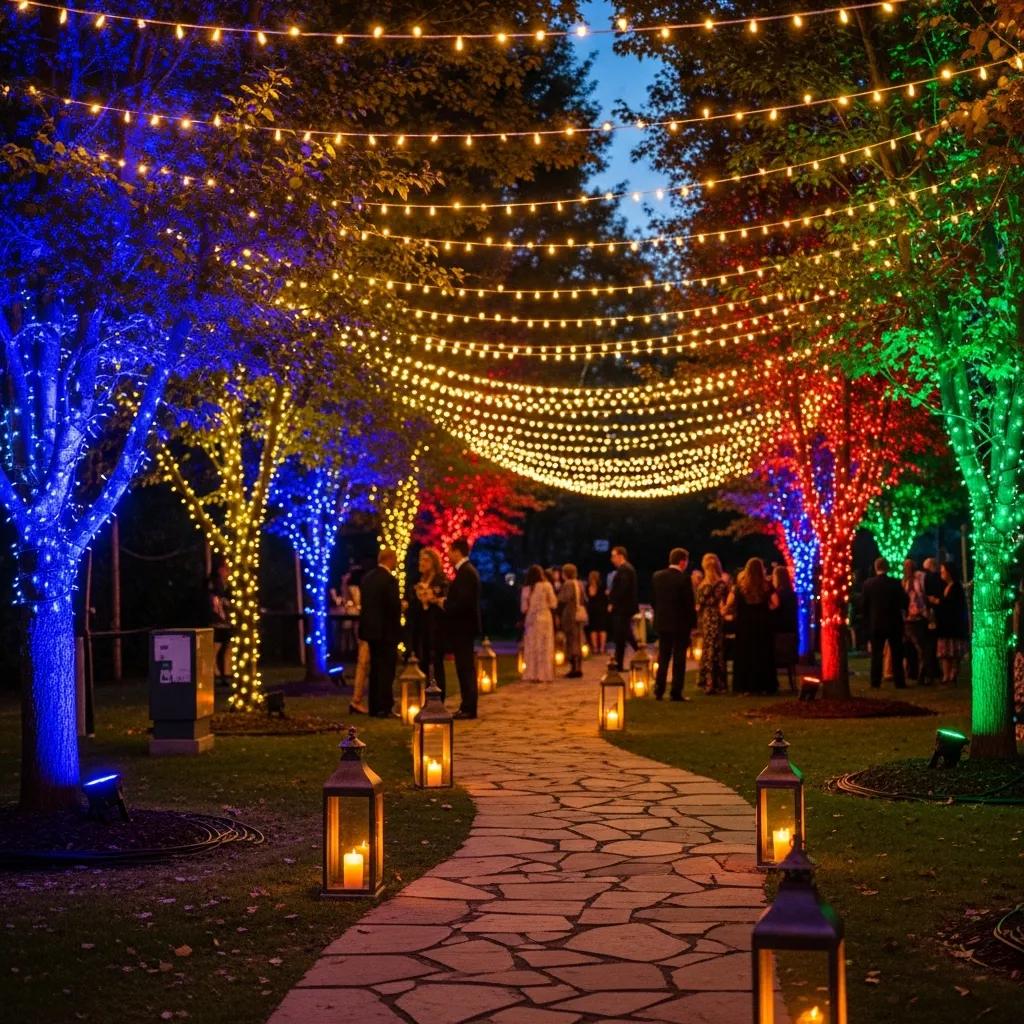
Seasonal and event lighting strategies let homeowners shift between permanent base systems and temporary overlays to handle holidays, weddings, and parties without rewiring or damage to finishes. The best planning approach installs permanent anchor points and low-voltage circuits to support temporary stringing, while smart scenes allow quick changes between regular and festive modes. Temporary fixtures should observe local codes and use proper connectors and outdoor-rated cords to ensure safety during short-term events. The next subsection explains how to plan permanent infrastructure that accommodates seasonal creativity.
Permanent infrastructure planning pays off when you want holiday flexibility with minimal hassle.
Pre-install anchor points and power taps to speed seasonal overlays.
Use smart scenes and presets to switch between normal and holiday lighting quickly.
Store and maintain seasonal fixtures to preserve connectors and prolong service life.
How Can Permanent and Holiday Lighting Be Integrated Seamlessly?
Seamless integration of permanent and holiday lighting begins with planning for anchor points, concealed wiring paths, and control presets that allow seasonal scenes without visible hardware clutter. Concealed low-voltage channels and mounting brackets make it simple to attach temporary décor and remove it cleanly, while programmable controllers let homeowners schedule holiday brightness and color shifts without manual rewiring. Use durable, outdoor-rated connectors for temporary strings and store them properly to prevent damage between seasons. Planning permanent infrastructure with seasonal overlays in mind reduces installation time for events and preserves the property’s everyday aesthetic.
What Are Creative Ideas for Party and Event Outdoor Lighting?
Event lighting favors high-impact, temporary effects like layered string lights over dining areas, uplit trees for dramatic silhouettes, lantern-lined pathways, and adaptable color scenes for stages or dance areas. When setting up temporary installations, prioritize safe power distribution with outdoor-rated extension solutions and avoid overloading circuits; consider battery-powered or low-voltage LED options for remote areas. Quick-release mounting and removable anchors enable fast setup and takedown while preserving landscaping and finishes. With safe, planned temporary installations, event lighting can transform a backyard into a memorable venue without long-term changes.
How Do You Choose the Right Blingle! Outdoor Lighting Service for Your Project?
Blingle! offers comprehensive outdoor lighting services focused on turning design ideas into turnkey installations using visualization technology, luxury LED products, and a worry-free approach to post-installation support. Choosing a professional partner often starts with a free design consultation to map zones, discuss desired scenes, and preview options using visualization tools that reduce uncertainty about final appearance. Blingle!’s year-round installation and maintenance services cover landscape, permanent, holiday, patio, event, and commercial lighting needs and emphasize smart controls and energy-efficient fixtures suited for modern homes. Understanding what each service includes helps homeowners compare scope, guarantees, and the value of professional design versus DIY approaches.
Below is a concise breakdown of Blingle!’s key service offerings and what customers gain from each option.
| Service Offering | Includes | Customer Benefit |
|---|---|---|
| Free design consultation | Visualization previews, custom plan | Reduces uncertainty; clarifies budget and scope |
| Installation (residential & commercial) | Luxury LED fixtures, smart controls | Turnkey setup with energy-efficient products |
| Year-round maintenance & holiday solutions | Seasonal installs, upkeep | Ongoing reliability and simplified seasonal changes |
| Worry-Free Guarantee | Post-install troubleshooting and support | Confidence in long-term performance and service |
What Free Design Consultations and Visualization Technologies Does Blingle! Offer?
Blingle!’s free design consultations pair a site assessment with visualization technology that lets homeowners preview lighting schemes on their property before committing to installation, reducing decision anxiety and enabling precise fixture placement. The visualization process typically models fixture types, beam spreads, and color temperatures so clients can evaluate different options in realistic renderings, streamlining revisions and budgeting. By previewing scenes, homeowners can prioritize key focal points and choose control strategies that suit daily use and events. Clear expectations from visualization help ensure installation aligns with design intent and long-term maintenance plans.
How Does Blingle!’s Worry-Free Guarantee Ensure Long-Term Satisfaction?
Blingle!’s Worry-Free Guarantee provides post-installation support and maintenance pathways that address common issues like fixture alignment, transformer servicing, and control updates so customers maintain reliable performance over time. The guarantee functions as a trust signal by promising follow-up troubleshooting and accessible maintenance options, reducing the perceived risk of investing in a permanent lighting system. Paired with year-round maintenance offerings, this approach helps homeowners preserve visual quality and system function across seasons. Understanding guarantee coverage and response processes makes it easier to choose professional installation with predictable long-term outcomes.
Frequently Asked Questions
What are the benefits of using smart outdoor lighting systems?
Smart outdoor lighting systems offer enhanced control and convenience, allowing homeowners to automate their lighting based on schedules, motion detection, or geofencing. These systems can create customized lighting scenes for different occasions, such as parties or quiet evenings, and can be controlled remotely via smartphone apps. Additionally, they can help save energy by ensuring lights are only on when needed, and they can integrate with other smart home devices for a cohesive experience. Overall, smart systems enhance both functionality and ambiance in outdoor spaces.
How can I maintain my outdoor lighting fixtures for longevity?
To ensure the longevity of outdoor lighting fixtures, regular maintenance is essential. Start by cleaning fixtures periodically to remove dirt, dust, and debris that can affect performance. Check for any signs of wear or damage, such as frayed wires or corroded connections, and replace any faulty components promptly. Additionally, ensure that fixtures are securely mounted and that any seals or gaskets are intact to prevent moisture ingress. Finally, consider seasonal checks to prepare for extreme weather conditions, ensuring your lighting remains functional year-round.
What are some energy-saving tips for outdoor lighting?
To save energy with outdoor lighting, consider using LED fixtures, which consume significantly less power than traditional incandescent bulbs. Implementing smart controls, such as timers or motion sensors, can also help ensure lights are only on when needed. Additionally, using lower wattage bulbs and strategically placing fixtures to maximize their effectiveness can reduce energy consumption. Finally, consider installing solar-powered lights in areas with adequate sunlight, as they require no electricity and can significantly lower your energy bills.
How do I choose the right color temperature for outdoor lighting?
Choosing the right color temperature for outdoor lighting is crucial for creating the desired ambiance. Warmer color temperatures (2700K-3000K) are generally preferred for residential settings, as they create a welcoming and cozy atmosphere. Cooler temperatures (4000K and above) can be used for security lighting or areas requiring higher visibility. It's essential to consider the surrounding environment and the purpose of the lighting; for example, garden lighting may benefit from warmer tones to enhance plant colors, while pathway lighting may require cooler tones for clarity and safety.
What are the best practices for installing outdoor lighting?
When installing outdoor lighting, start by mapping out the areas you want to illuminate and determining the purpose of each light fixture. Ensure that fixtures are placed at appropriate heights and distances to avoid glare and ensure even illumination. Use weather-resistant materials and fixtures rated for outdoor use to withstand environmental conditions. Additionally, consider the power source and ensure that wiring is safely installed, following local codes. Finally, test the lighting after installation to make adjustments for optimal performance and aesthetics.
How can I incorporate seasonal lighting into my outdoor design?
Incorporating seasonal lighting into your outdoor design can enhance the ambiance for various occasions. Start by installing permanent anchor points and low-voltage circuits that allow for easy attachment of temporary lights during holidays or events. Use smart controls to switch between regular and festive lighting quickly. Consider using versatile fixtures, such as string lights or lanterns, that can be easily adapted for different seasons. Proper storage and maintenance of seasonal fixtures will also ensure they remain in good condition for future use.
Conclusion
Implementing effective outdoor lighting transforms your front and back yards into inviting, safe, and functional spaces. By utilizing layered designs, energy-efficient LEDs, and smart controls, homeowners can enhance curb appeal while ensuring safety and usability. Explore our range of professional lighting services to bring your vision to life with ease and expertise. Start your journey towards a beautifully illuminated outdoor space today.