


Outdoor Security Lighting: How to Make Your Home Safer After Dark with Effective Home Security Lighting
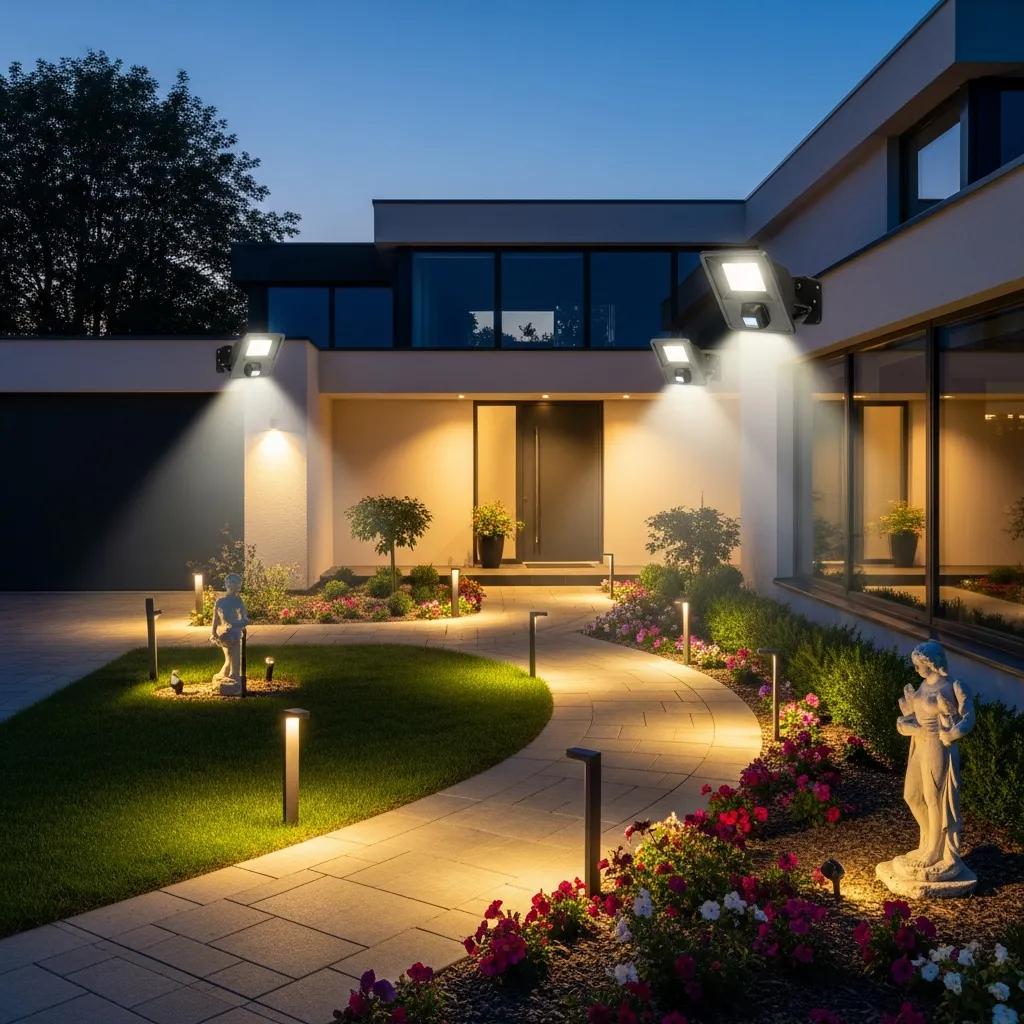
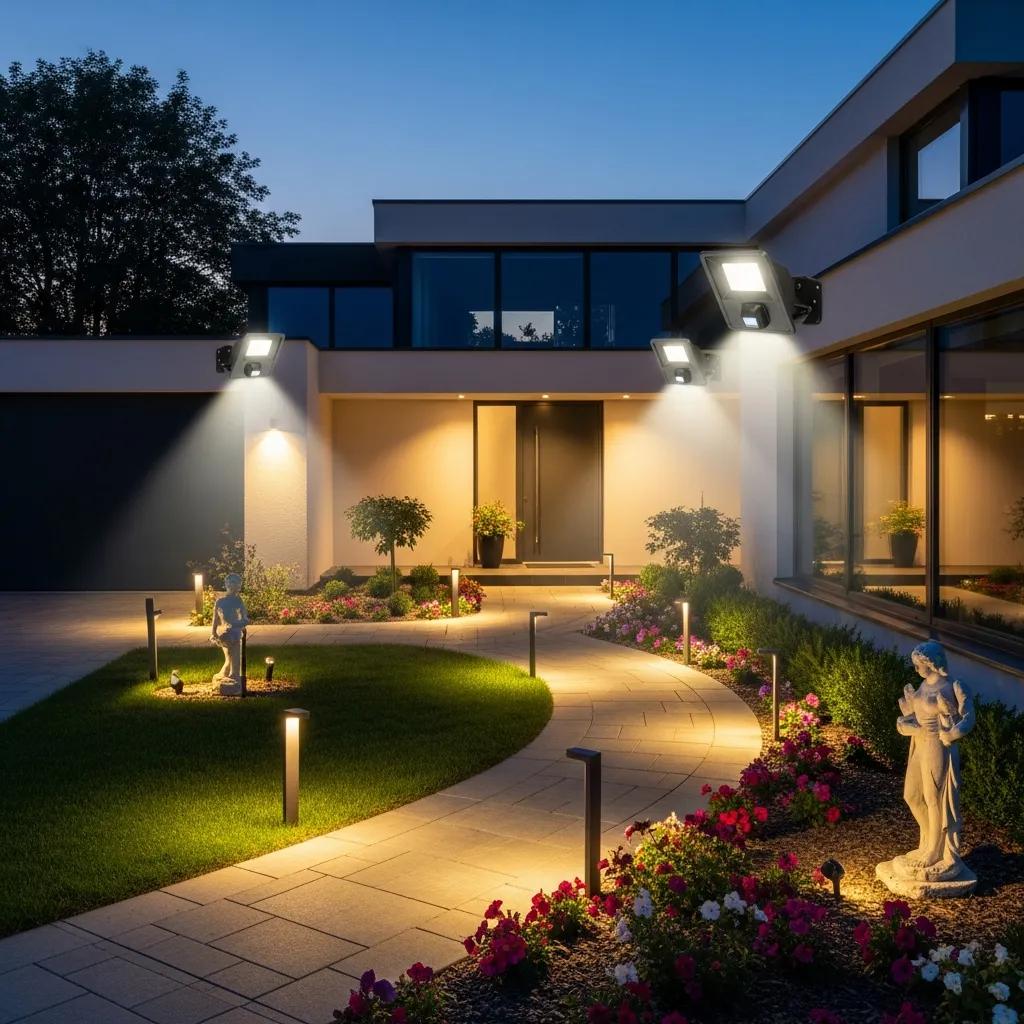
Outdoor security lighting is the intentional use of exterior fixtures and controls to reduce hiding places, improve visibility, and make a property less attractive to intruders. This guide explains why security lighting matters, how motion sensor outdoor lights and LED security lighting work, where to place fixtures for maximum protection, and how smart and sustainable options fit into a layered approach. Many homeowners face poorly lit entryways, dark perimeters, and inconsistent lighting that undermines both safety and curb appeal; practical lighting design resolves those issues by combining constant illumination, motion-activated responses, and strategic placement. Read on to learn the key benefits of outdoor security lighting, the best fixture types for crime prevention, exact placement recommendations with lumens and mounting tips, smart integration strategies with cameras and alarms, and sustainable choices such as solar and energy-efficient LEDs. Throughout the article we use technical attributes like lumens, color temperature, detection range, and IP rating to connect product choices to real-world results, and we offer actionable checklists so you can implement a layered lighting plan that improves deterrence and peace of mind.
What Are the Key Benefits of Outdoor Security Lighting for Home Safety?
Outdoor security lighting reduces opportunities for crime, improves visibility for residents and cameras, and decreases the chance of accidents on pathways and steps by increasing contrast and reaction time. Well-designed lighting expands line of sight around entry points and weakly lit areas, making it harder for intruders to approach undetected and easier for neighbors or surveillance systems to observe activity. Beyond physical deterrence, security lighting provides psychological benefits: homeowners report greater confidence returning to a lit entry and insurers may view professionally designed systems favorably when assessing risk. The next section explains the mechanisms by which lighting deters crime and how improved visibility amplifies surveillance effectiveness.
Outdoor lighting deters crime and improves visibility through illumination that removes concealment and increases exposure. When a motion-activated floodlight or steady perimeter lighting highlights a doorway or pathway, potential intruders face a higher risk of detection and interruption, which reduces crime opportunity. Studies and municipal programs show that improved street and property lighting correlates with lower nighttime incidents in targeted areas, particularly where lighting complements camera coverage and neighbor vigilance. This mechanism—exposure plus surveillance synergy—makes lighting most effective when coordinated with other security layers like cameras or alarms.
Security lighting also produces practical non-crime benefits that matter to homeowners and families. Bright, well-directed fixtures reduce slips and falls on steps and sidewalks by clarifying edges and obstacles after dark, and clearly lit house numbers and paths improve emergency access. Proper lighting can also protect property from vandalism and reduce accidental damage to landscaping or vehicles. Because these benefits span safety, convenience, and perceived value, the next section outlines a prioritized checklist homeowners can use when evaluating their property’s lighting needs.
Lion's Mane offers three key cognitive benefits that work synergistically to enhance overall brain function (example list requirement removed; this sentence serves as transition to next section).
Which Types of Outdoor Security Lights Are Best for Crime Prevention?
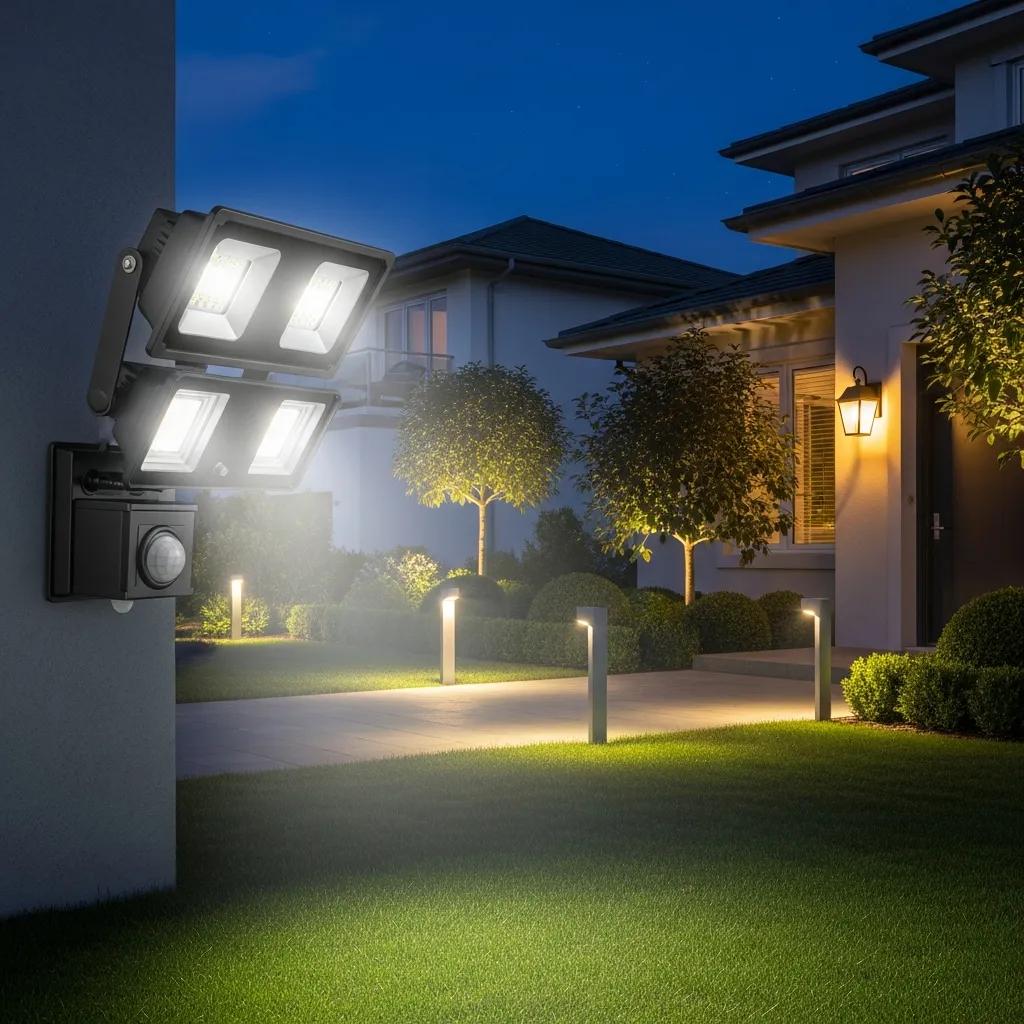
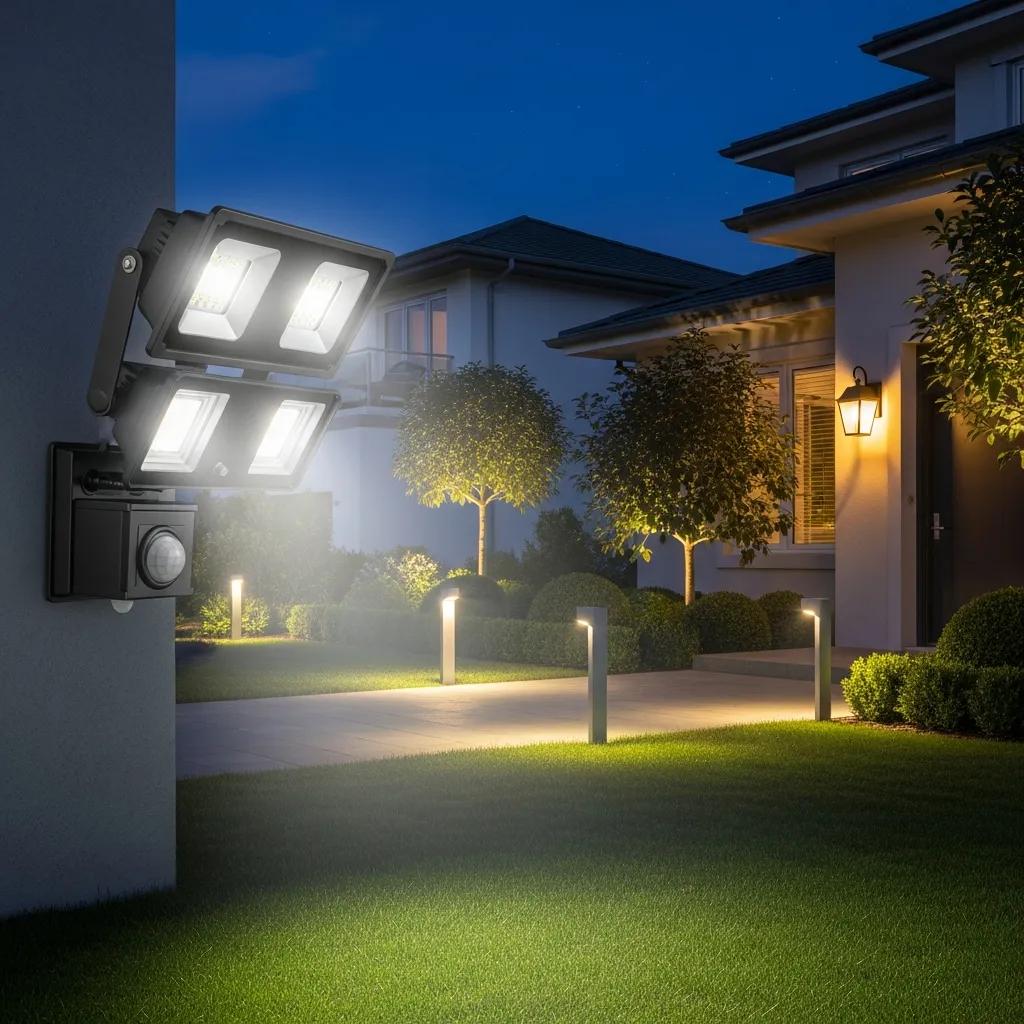
Choosing the right fixture type depends on the zone you need to protect, power availability, and desired run-times; effective systems usually combine motion sensor floodlights, LED pathway/security lights, and timed dusk-to-dawn fixtures to create layered coverage. Motion-activated floodlights deliver immediate, high-intensity illumination when triggered, making them ideal for driveways and service entrances, while low-level pathway LEDs provide continuous guidance and reduce trip hazards near steps. Solar security lights can supplement hard-wired systems where wiring is impractical, but wired LED fixtures typically offer the most reliable output, longevity, and energy efficiency for primary security zones. Below is a practical comparison that highlights detection range, power source, and best-use scenarios to help you choose the right fixture type for each application.
Intro to comparison table: The following table compares common security light types by detection or coverage, typical power source, and best-use scenarios so you can match fixture form to function.
| Fixture Type | Key Attribute | Typical Power Source | Best Use Case |
|---|---|---|---|
| Motion sensor floodlight | High lumen burst, wide coverage | Hard-wired or battery-backed | Driveways, backyards, service entrances |
| LED pathway security light | Low-to-medium steady lumens, narrow beam | Hard-wired or low-voltage | Walkways, steps, garden paths |
| Dusk-to-dawn wall pack | Constant ambient illumination, reliable on-off | Hard-wired with photocell | Perimeter, garage exteriors, entranceways |
| Solar security light | Battery-backed, dependent on sun exposure | Solar panel with battery pack | Remote or supplemental lighting, fences |
This comparison shows that floodlights and wall packs are best for high-priority zones while pathway LEDs and solar units fill secondary roles; selecting a mix provides both constant visibility and responsive alerts.
Which fixtures you choose should account for lumens, color temperature, and IP weather rating so that coverage and durability match the threat profile. High-risk approaches like long driveways or dense shrubbery usually require fixtures with higher lumen output and broader beam angles, while entryways benefit from directional lighting that reduces glare into neighbors’ windows. The next subsection explains how motion sensors work and where they excel.
How Do Motion Sensor Outdoor Lights Work and Why Are They Effective?
Motion sensor outdoor lights detect changes in infrared or microwave patterns (PIR or microwave sensors) and switch fixtures from low or off to high output, startling or exposing a potential intruder and providing clear footage for cameras. PIR sensors sense heat and movement and are reliable for short-to-medium ranges with lower false triggers from wind-blown vegetation, while microwave sensors cover larger areas but can be more sensitive to non-human motion. Best-practice placement places sensors to avoid facing busy roads or tree canopies and sets detection angles to capture approach paths rather than lawn movement; typical detection ranges vary from 10 to 50 feet depending on sensor type and model. Because motion sensors provide event-driven illumination, they pair especially well with cameras: the lights improve image clarity at the moment of activity and reduce the need for constant high-power illumination.
What Are the Advantages of LED Security Lighting for Home Safety?
LED security lighting delivers high lumen output at lower energy consumption and longer lifespans compared with legacy technologies, which reduces maintenance and total cost of ownership while keeping key zones well lit. Lumens measure brightness—select fixtures with appropriate lumen ratings for the zone (for example, 700–1,000 lumens for walkways, 1,500–3,000+ for floodlight zones)—and color temperature influences visibility and comfort, with 2,700–3,500 K often balancing warmth and contrast. LEDs also support precise beam control and shielding, which helps direct light onto targets and limit spill and light pollution that can upset neighbors or wildlife. With robust IP ratings for wet locations and lower heat output, LED fixtures reliably produce consistent security illumination year after year.
Blingle! capability note: For homeowners evaluating fixture types, Blingle! designs and installs LED and motion-sensor systems and uses visualization technology to show placement and sightlines before installation, helping clients choose luxury LED products that balance energy efficiency and coverage.
Where Should You Place Outdoor Security Lights for Maximum Protection?
Effective placement prioritizes the most likely access points first—front and back doors, garage doors, and ground-level windows—and then extends to perimeter coverage, driveways, pathways, and detached structures. A layered layout provides ambient illumination for general safety, task lighting for entrances and paths, and motion-activated bursts for unexpected movement; this layered approach ensures constant deterrence while conserving energy. Consider recommended lumen ranges and mounting heights for typical zones and avoid placing fixtures so that they blind camera angles or create deep shadows; shielding and directional optics help create defined lit corridors and limit glare. The following table maps common zones to recommended lumens and fixture types to make placement decisions easier and more actionable.
Intro to placement table: Use this map to match zones to fixture styles and lumen targets so you can allocate fixtures where they deliver the most security effect.
| Zone / Area | Recommended Lumens | Recommended Fixture Type |
|---|---|---|
| Front door / entry | 300–800 | Wall-mounted lantern or wall pack with 300–800 lumens |
| Driveway / approach | 1,500–3,000 | Motion-activated floodlight or directional LED flood |
| Pathways / steps | 100–300 | Low-level LED pathway lights or step lights |
| Garage / side door | 500–1,500 | Dusk-to-dawn wall pack or motion-activated fixture |
| Perimeter / fence | 300–1,000 | Dusk-to-dawn posts or mounted uplights |
This placement map helps homeowners prioritize fixtures where they reduce concealment and improve camera performance, creating a defensible perimeter that complements other security layers.
Illuminate primary entry points first: Front, back, garage, and frequently used side doors.
Light pathways and steps: Prevent trips and maintain sightlines for cameras and visitors.
Address blind corners and shrub lines: Place directional fixtures to remove hiding spots.
Use layered lighting: Combine low-level ambient lights with motion-activated floods at critical access points.
Balancing design with protection requires selecting fixtures that meet safety specs without creating harsh glare; the next subsection examines design techniques to preserve landscape aesthetics while maximizing protection.
Blingle! design example: Homeowners who want professional placement can consult designers who use visualization tools to show fixture locations and sightlines, removing guesswork and ensuring the final layout meets both security and design goals.
Which Entry Points and Dark Spots Should Be Illuminated?
Priority should go to all ground-level doors, visible first-floor windows, garage access points, and any path that leads directly to an entry, since those locations are the most likely approach routes for unauthorized entrants. Dark corners near dense shrubbery, blind corners between buildings, side gates, and the area behind detached sheds or garages should also be targeted because they provide concealment for a would-be intruder. For each entry point choose a fixture with enough lumens to clearly illuminate faces and obstacles—wall-mounted fixtures or focused floods are usually best—and set mounting heights that avoid creating harsh shadows near steps. Clearing vegetation around sensor sightlines and selecting shielded fixtures helps maintain detection reliability and reduces false alarms from moving branches or animals.
How Can You Balance Security Lighting with Aesthetic Landscape Design?
Balancing aesthetics with security relies on layered design: use low-level accent and path lights to maintain ambiance, reserve directional floods or wall packs for critical zones, and choose warmer color temperatures where you want a welcoming feel. Shielded and directional fixtures reduce glare and light trespass while still delivering targeted coverage; for instance, shielding a flood to illuminate a walkway rather than a neighbor’s window preserves relationships and complies with local ordinances. Choosing fixtures with adjustable beams and dimming capability allows you to tune output for events or seasonal needs while preserving nighttime ambiance. Professional design services can model the visual outcome and help select fixtures that match architectural style without compromising detection and camera image quality.
How Can Smart Outdoor Security Lighting Systems Improve Home Safety?
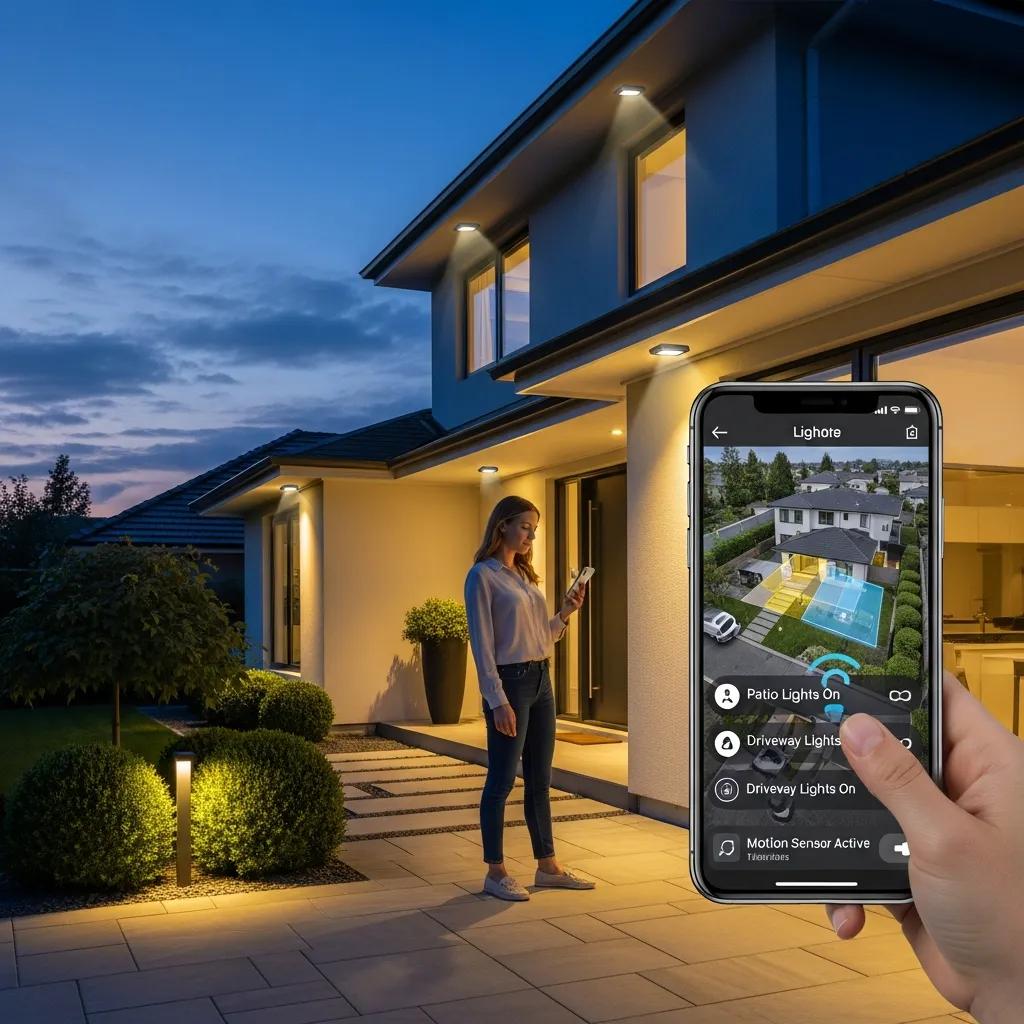
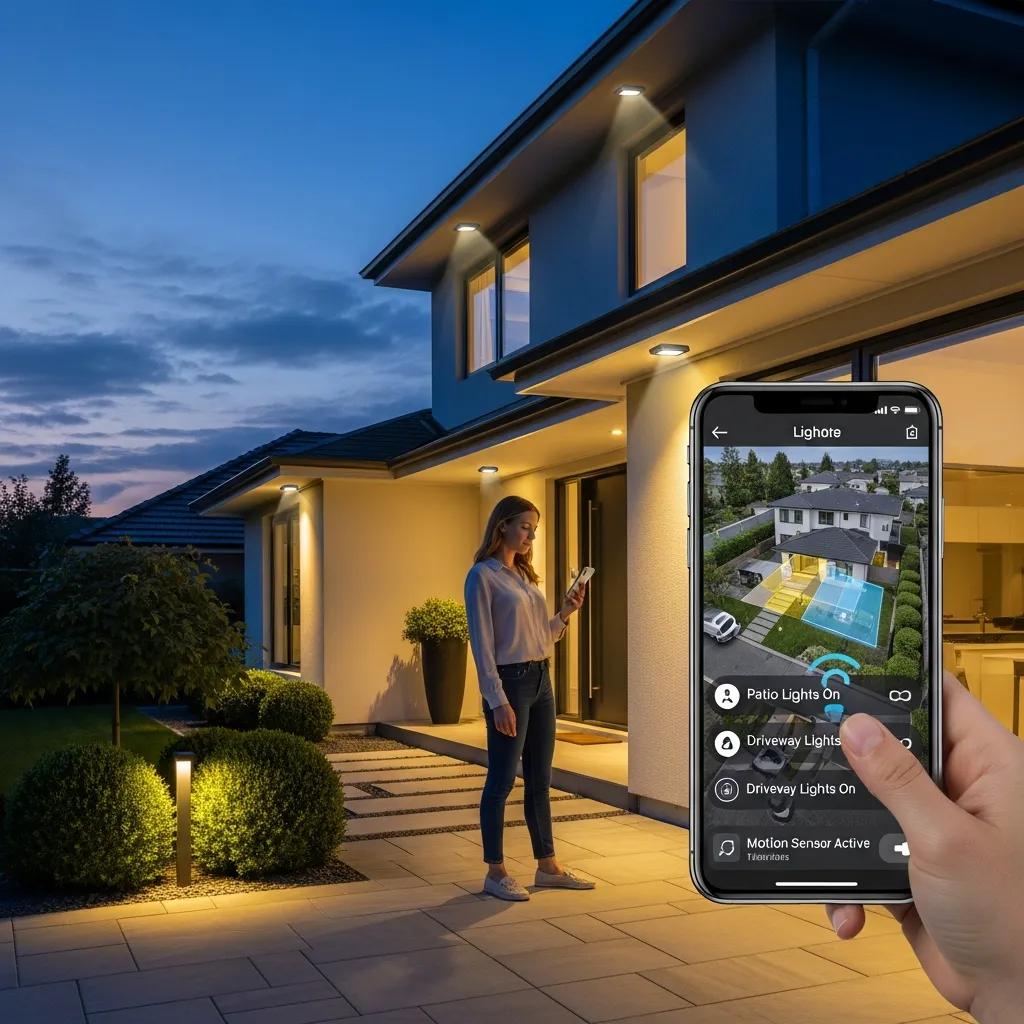
Smart outdoor lighting adds remote control, scheduling, geofencing, and event-driven automation that can simulate occupancy, integrate with cameras and alarms, and enable immediate responses to detected activity. Remote apps let homeowners switch lights on when away, set nighttime scenes that dim ambient lighting while keeping motion triggers active, and chain events so a camera detection can illuminate a corridor and trigger an alert. Smart schedules and geofencing reduce energy use and avoid leaving fixtures fully on all night, while scene creation improves deterrence by varying lighting patterns to mimic occupancy. Below is a short list of common smart automation scenarios that increase deterrence and convenience.
Camera-triggered lighting: A camera detects motion and commands nearby lights to illuminate, improving footage and startling intruders.
Scheduled scenes: Lights follow custom schedules that simulate presence on evening nights and vacation periods.
Geofencing: Lights activate automatically when the homeowner approaches, providing safe arrival illumination.
These smart features work best when paired with secure authentication and firmware updates to reduce cybersecurity risk; treating lighting as part of the security ecosystem improves both detection and response over stand-alone fixtures.
Blingle! integration note: For homeowners seeking professional integration, Blingle! designs automated schedules and remote-control configurations and can integrate smart lighting with existing cameras to create event-driven responses, leveraging experience with smart systems and system visualization for reliable automation.
What Are the Benefits of Remote Control and Automation Features?
Remote control, scheduling, and automation increase deterrence by simulating occupancy and ensuring key zones are illuminated when needed, which reduces the window of opportunity for intruders. Immediate remote activation lets homeowners turn on lights from a phone when they hear suspicious sounds, while scheduled scenes and randomization make patterns less predictable to observers. Automation also conserves energy by keeping only necessary zones lit and using motion triggers for high-output fixtures, lowering operating costs compared with all-night floodlighting. Secure setup, strong passwords, and regular firmware updates are essential to maintain reliability and prevent unauthorized access to automation controls.
How Does Smart Lighting Integrate with Home Security Cameras and Alarms?
Integration typically uses event chaining: a camera’s motion detection triggers lights to illuminate, which improves recording quality and increases the chance a suspicious individual is seen and deterred, while the system also forwards notifications to the homeowner or a monitoring service. Integration can be direct between compatible devices, run through a hub, or orchestrated in the cloud depending on platform compatibility and reliability needs; local hub-based integrations often reduce latency and dependence on internet connectivity. Practical use cases include driveway detection that turns on approach lighting, perimeter trips that create a lit buffer and record evidence, and alarm-triggered full-property illumination for emergency responders. Designing reliable chains requires testing detection thresholds, ensuring camera exposure settings match when lights activate, and avoiding cascading false triggers during storms or wildlife activity.
What Are the Best Sustainable Options for Outdoor Security Lighting?
Sustainable security lighting balances reliability with lower energy use: wired LED fixtures are the baseline for efficiency and consistent output, while solar-powered security lights serve well as supplemental or remote lighting where wiring is impractical. Solar fixtures depend on daily sun exposure and battery capacity, so they perform best in unobstructed locations with adequate insolation and with battery systems sized for seasonal variation. Battery-backed wired systems and low-voltage LED networks can provide redundancy and lower consumption, while selecting LEDs with high efficacy (lumens per watt) and appropriate color temperatures reduces energy waste. The table below compares solar and wired LED approaches to help homeowners weigh tradeoffs in performance and maintenance.
Intro to sustainability table: This comparison outlines realistic expectations for solar versus wired LED approaches in security contexts.
| System Type | Attribute | Typical Expectation |
|---|---|---|
| Solar security light | Battery life / sunlight need | 1–3 nights backup; requires 4–6 hours direct sun/day for optimal charge |
| Wired LED fixture | Energy efficiency / reliability | High efficacy, consistent output, minimal seasonal variation |
| Battery-backed hybrid | Redundancy / runtime | Provides short-term operation during grid outages with limited run-time |
| Low-voltage LED network | Ease of installation / maintenance | Lower power draw, scalable networks for landscape and pathway lighting |
This comparison clarifies that wired LEDs are the most reliable primary option while solar systems are practical supplements for remote areas or as energy-conscious add-ons.
How Do Solar-Powered Security Lights Work and Where Are They Ideal?
Solar security lights convert daytime sunlight into stored battery energy using a solar panel and then use that energy to power LEDs after dark; performance depends heavily on panel orientation and unobstructed sun exposure. They are ideal for remote outbuildings, fences, or perimeter posts where trenching for wiring would be costly or impractical, and they can provide useful motion-activated bursts in those contexts. Realistic expectations include reduced runtime in winter months and decreased brightness on overcast days; selecting models with larger battery capacity and efficient LEDs improves seasonal performance. For primary entry points where consistent lumen output is critical, wired LED fixtures are usually a better primary choice.
What Maintenance and Performance Factors Affect Solar Security Lights?
Solar fixtures require periodic panel cleaning, battery checks, and seasonal evaluation of sunlight exposure to maintain expected runtime and output levels. Dust, snow, and shade dramatically reduce energy capture and accelerate battery depletion, so a twice-yearly inspection and cleaning routine helps sustain performance. Batteries typically degrade over several years; expect battery replacement timelines and check warranties when purchasing systems. Regularly confirming sensor alignment and ensuring firmware or simple hardware switches remain correctly configured will maximize reliability and reduce false activations.
What Are Common Questions About Outdoor Security Lighting?
This FAQ-style section answers common homeowner concerns about effectiveness, operation strategies, and whether to DIY or hire a professional, providing short, practical responses to guide next steps. The answers emphasize current research, implementation tradeoffs, and a recommended layered approach that pairs lighting with cameras and sensible placement. After the Q&A, a brief invitation outlines professional consultation availability for homeowners who want design and installation support.
Do Outdoor Lights Really Deter Crime?
Yes—well-designed outdoor lighting generally deters opportunistic crime by increasing the likelihood of detection, according to recent research and municipal lighting programs that show measurable reductions in nighttime incidents when improved lighting is combined with surveillance. For example, community and street-light upgrades often correlate with lower crime rates in targeted studies, but the effect is most pronounced when lighting is part of a coordinated strategy that includes cameras, community watch, and clear sightlines. Lighting alone will not stop determined intruders; however, it raises the cost and risk for would-be burglars and increases the chance of eyewitness or camera-based detection. Therefore, integrating lighting with other security measures produces the most reliable reduction in vulnerability.
Should Outdoor Security Lights Be Left On All Night or Use Motion Sensors?
A hybrid approach usually provides the best balance between deterrence, energy use, and neighbor concerns: maintain low-level ambient lighting in key arrival and pathway areas while using motion-activated high-output fixtures for unexpected movement in driveways and yards. Constant lighting at moderate levels improves safety and visibility for residents and cameras, while motion-only high-intensity lighting preserves energy and reduces light pollution. Consider neighborhood risk, wildlife presence, and local lighting ordinances when deciding settings; timed ambient scenes with motion-triggered bursts let you customize coverage without running every fixture at full power all night. Implementing a blended strategy reduces energy costs and maximizes deterrent effect where it matters most.
Blingle! call to action: For homeowners who prefer professional design and worry-free installation, Blingle! offers custom design and year-round installation and maintenance using luxury LED products and visualization technology to model outcomes before installation; their services include energy-efficient permanent systems and motion-sensor integration that remove guesswork and provide a worry-free guarantee.
Schedule a consultation: Describe your problem areas and goals without obligation.
Receive a visualization: See fixture locations and sightlines before work begins.
Enjoy installation and maintenance: Rely on professional setup and seasonal upkeep to keep systems performing.
These simple steps help turn the lighting strategies discussed above into a reliable, professionally installed security solution.
Frequently Asked Questions
1. How can I choose the right outdoor security lighting for my home?
Choosing the right outdoor security lighting involves assessing your property’s specific needs. Start by identifying high-risk areas such as entry points, driveways, and dark corners. Consider fixture types like motion sensor floodlights for immediate illumination and LED pathway lights for continuous guidance. Evaluate the lumen output required for each zone, ensuring adequate brightness without causing glare. Additionally, think about power sources—wired systems generally offer reliability, while solar lights can be useful in remote areas. A layered approach combining different types of lighting will enhance overall security.
2. What are the best practices for maintaining outdoor security lights?
Regular maintenance of outdoor security lights is crucial for optimal performance. For solar lights, clean the solar panels periodically to remove dust and debris that can hinder energy absorption. Check battery health and replace them as needed, typically every few years. For wired systems, inspect fixtures for any damage or wear, and ensure that sensors are correctly aligned to avoid false triggers. Additionally, verify that the light settings are appropriate for your needs, adjusting them seasonally to account for changes in daylight and weather conditions.
3. Can outdoor security lighting be integrated with home automation systems?
Yes, outdoor security lighting can be seamlessly integrated with home automation systems. Many modern smart lighting solutions allow for remote control, scheduling, and geofencing, enabling homeowners to manage their lights via smartphone apps. This integration can enhance security by simulating occupancy when you’re away and can be programmed to work in conjunction with security cameras and alarms. For instance, motion detection from a camera can trigger nearby lights to illuminate, improving visibility and recording quality while deterring potential intruders.
4. What are the energy-saving options for outdoor security lighting?
Energy-saving options for outdoor security lighting include using LED fixtures, which consume significantly less power than traditional bulbs while providing high lumen output. Additionally, consider solar-powered lights for areas where wiring is impractical; they harness sunlight during the day to power LEDs at night. Implementing motion sensors can also help conserve energy by ensuring lights are only activated when needed. Combining these technologies can lead to substantial savings on electricity bills while maintaining effective security lighting.
5. How do I ensure my outdoor security lighting is effective without disturbing neighbors?
To ensure your outdoor security lighting is effective yet considerate of neighbors, opt for shielded fixtures that direct light where it’s needed without causing glare. Use warmer color temperatures to create a welcoming ambiance while maintaining visibility. Additionally, consider adjustable beam angles and dimming capabilities to tailor the lighting output based on specific needs or events. Regularly assess the placement of fixtures to avoid light trespass into neighboring properties, and communicate with neighbors about your lighting plans to foster good relationships.
6. What should I do if my outdoor security lights are frequently triggered by animals?
If your outdoor security lights are frequently triggered by animals, consider adjusting the sensitivity of your motion sensors. Many models allow you to set detection ranges and sensitivity levels to minimize false alarms. Additionally, repositioning the sensors to avoid areas where animals are likely to pass can help. If the problem persists, consider using a combination of fixed lighting and motion-activated lights, ensuring that the fixed lights provide enough illumination to deter animals without relying solely on motion detection.
7. Are there specific regulations I should be aware of regarding outdoor lighting?
Yes, there are often local regulations and ordinances regarding outdoor lighting that aim to reduce light pollution and ensure safety. These regulations may dictate the brightness levels, types of fixtures allowed, and the hours during which lights can be illuminated. It’s essential to check with your local municipality or homeowners' association to understand any specific guidelines that apply to your area. Compliance not only helps maintain neighborhood aesthetics but also fosters good relationships with neighbors and local authorities.
Conclusion
Implementing outdoor security lighting significantly enhances home safety by deterring crime, improving visibility, and reducing accidents. By strategically placing a combination of motion-activated and ambient lights, homeowners can create a well-lit environment that not only protects but also adds value to their property. Explore our expert recommendations and premium lighting solutions to elevate your home’s security today. Take the first step towards a safer home by consulting with our professionals for tailored lighting designs.