

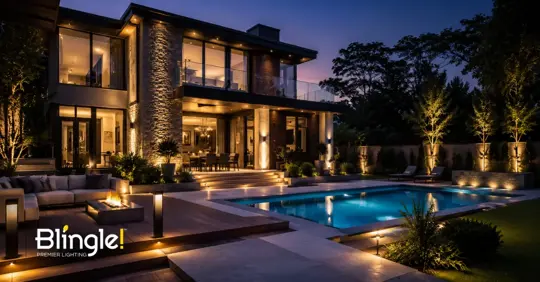
From String Lights to Spotlights: Backyard Lighting Ideas You’ll Love
Your backyard doesn't have to vanish after sunset. With the right lighting, it becomes one of your home's most-used and most-loved spaces — long after the sun goes down. Whether you're after a cozy atmosphere for weeknight dinners outside, dramatic architectural lighting for curb appeal, or a full layered system that covers safety, ambiance, and style, there's a backyard lighting strategy that fits.
This guide walks through the full spectrum: from simple, affordable string light setups to professional-grade permanent installations. You'll learn the different types of outdoor lighting, how to layer them effectively, what to expect in terms of cost and ROI, and how to get started with a design that actually works for your space. One thing to keep in mind before we dive in: according to the National Association of Realtors, professionally installed landscape lighting delivers an average return on investment of around 59% — making this one of the smarter home improvement projects you can undertake.
Why Lighting Your Backyard Is Worth It
Great outdoor lighting isn't just about looks — though it absolutely delivers there. Here's what a well-designed backyard lighting plan actually does for you:
It expands your usable living space.
A dark backyard is a backyard you stop using at 8 p.m. Proper lighting turns patios, decks, and garden spaces into functional outdoor rooms that work year-round, extending the hours you actually enjoy your investment.
It improves safety and security.
Lit pathways, steps, and perimeter zones dramatically reduce the risk of trips and falls — and well-lit exteriors are a proven deterrent to intruders. Motion-activated floodlights and perimeter lighting add a practical layer of protection that pure ambiance lighting can't replicate.
It adds real financial value.
According to Better Homes & Gardens, a landscape lighting package (roughly 20 LED lights with a transformer) costs around $6,800 and adds approximately $4,000 in home value — representing a ~59% ROI. Rocket Mortgage similarly notes that outdoor lighting updates deliver around 50% ROI in the home renovation context. That's meaningful return for something that also enhances your daily life.
It's more energy-efficient than ever.
According to the U.S. Department of Energy, LED lighting uses about 75% less energy than incandescent alternatives, and the average household saves approximately $225 per year by switching to LEDs. Modern smart lighting systems amplify those savings further through timers, motion sensors, dimmers, and app-based controls that eliminate waste.
Types of Backyard Lighting
A thoughtfully designed backyard uses multiple fixture types working together. Here's a breakdown of the main categories — from soft and subtle to bold and functional.
String & Festoon Lights
String lights remain one of the most popular and versatile backyard lighting options. Draped across a pergola, strung overhead above a patio dining area, or woven through trees, they create warmth and atmosphere that few other fixtures can match. In 2025, permanent festoon-style string systems have become increasingly popular as a durable alternative to seasonal clip-on strands.
Best for: Patios, pergolas, outdoor dining areas, trees and garden features
Pros: Affordable, highly versatile, easy to install, strong ambiance
Cons: Standard versions aren't always weather-durable; can look cluttered if overdone
For design ideas specific to pergola and overhead string lighting, see Blingle's pergola lighting ideas.
Path, Walkway & Step Lighting
Path and step lights serve double duty: they guide guests safely through your yard and add a polished, designed look to your landscape. Options range from low-profile bollards and in-ground uplights to embedded pavers with integrated LEDs. Recessed step lighting — subtle strips or discs set directly into stair risers — is a particularly clean, modern look that's trending strongly in 2025.
Best for: Garden paths, front walkways, deck stairs, driveways
Pros: Clear safety benefit, low-maintenance, works well with timers
Cons: Requires careful spacing to avoid over-lighting or creating harsh pools
Explore low-voltage lighting in garden design for path and walkway inspiration.
Accent & Landscape Lighting
Landscape accent lighting puts a spotlight on the features your yard already has: mature trees, ornamental shrubs, garden beds, stone walls, or water features. Uplights placed at the base of trees cast dramatic shadows upward through branches. Wall wash fixtures create a soft, even glow across fences or retaining walls. Downlighting from elevated positions mimics natural moonlight filtering through the canopy.
Best for: Trees, shrubs, garden beds, architectural features, fences
Pros: Adds depth and drama; highlights landscape investments you've already made
Cons: Placement is critical — poor angles create glare or flat, unappealing light
Spotlights & Architectural Lighting
For homes with strong exterior architecture — brick facades, stone chimneys, statement entryways — architectural spotlights make those features work at night as hard as they do during the day. Well-placed spotlights on focal trees or water features create a "designed" look that photographs beautifully and impresses at street level.
Best for: Home facades, focal trees, water features, sculptures, statement garden elements
Pros: High-impact curb appeal; excellent for home value and listing photos
Cons: Higher fixture cost; placement and beam angle require professional expertise
Deck, Railing & Step Lights
Integrated deck lighting, including small LEDs set into railing posts, stair risers, or the deck surface itself, creates a refined, architectural look while eliminating tripping hazards. These fixtures are subtle by design; the goal is illumination without visible hardware. When done well, they make a deck feel custom-built rather than installed.
Best for: Multi-level decks, raised platforms, stairs, railing systems
Pros: Seamlessly integrated; long-lasting; both functional and aesthetic
Cons: Best installed during deck construction or major renovation
Security, Motion & Flood Lighting
Security lighting prioritizes function: it illuminates driveways, garage areas, perimeter zones, and dark corners where visibility matters. Modern motion-activated floodlights have evolved significantly — today's designs are sleek, directional, and far less harsh than older models. Used thoughtfully, they complement your overall lighting scheme rather than fighting it.
Best for: Driveways, garage approaches, side yards, perimeter zones
Pros: Safety and security; motion activation reduces energy use
Cons: Poorly aimed fixtures create glare; positioning requires care
Color, Ambient & Smart RGB Lighting
Color-changing LED and smart lighting systems have matured into legitimate design tools. In 2025, more homeowners are using Wi-Fi-enabled fixtures that integrate with Alexa, Google Assistant, or Apple HomeKit — allowing them to shift from a warm "evening dinner" scene to a vibrant "backyard party" palette with a single tap. RGB systems work especially well as accent layers for special occasions or seasonal holiday displays, without requiring any reinstallation.
Best for: Entertaining spaces, holiday decorating, mood-setting zones
Pros: Maximum flexibility; one system handles multiple looks
Cons: Smart systems require initial setup; best paired with a stable control hub
Temporary vs. Permanent Backyard Lighting: Pros, Costs & When to Choose Which
One of the biggest decisions homeowners face is how committed to be. Here's an honest comparison — and a note upfront: whether you go temporary, permanent, or a hybrid of both, professional installation makes a meaningful difference in how the final result looks, lasts, and performs.
Temporary & Seasonal Lighting
Plug-in string lights, solar path stakes, and battery-operated accent fixtures are easy to install, easy to move, and easy to swap out seasonally. They're a great starting point for homeowners experimenting with layout and style before committing to a permanent design. The tradeoff is durability — standard seasonal lights aren't built to withstand year-round weather exposure, and the cost of replacing them every few years can add up.
Permanent Lighting Design
Professionally installed permanent systems use commercial-grade wiring, weatherproof fixtures, and low-voltage transformers built to handle year-round outdoor conditions. They're integrated into your landscape rather than added to it, which creates a cleaner, more intentional look. The upfront investment is higher — most homeowners spend between $2,000 and $6,000 for a standard professional landscape lighting installation — but the durability, performance, and ROI are substantially better. For homes planning to sell within 5–10 years, a well-designed permanent system is one of the highest-impact improvements available. Learn more about Blingle's permanent lighting solutions and see expert tips for permanent outdoor lighting.
Hybrid Models
Many homeowners find the middle ground most practical: a permanent foundation of path lights, architectural spotlights, and integrated deck lighting, supplemented by modular string or accent systems that can be adjusted seasonally. This approach lets you invest in the fixtures where permanence matters most (pathways, security, architecture) while retaining flexibility in decorative zones. A professional designer can map out a phased plan that grows with your budget and your landscape.
Design Principles & Layout Tips
Having the right fixtures is only half the equation. How you use them — and how they work together — determines whether your backyard looks designed or just decorated.
Layer your lighting.
Professional lighting designers work in three layers: ambient (overall soft illumination), task (functional light for cooking, dining, or navigating), and accent (highlighting specific features). Using all three creates depth and dimension. A space lit by only one type — even beautiful string lights — feels flat compared to one that layers all three.
Avoid over-lighting.
More is not more. Over-lit backyards lose the contrast that makes well-placed lighting dramatic. Darkness is part of the design — it's what makes the lit areas feel intentional. Highlight specific features; don't attempt to illuminate everything.
Choose the right color temperature.
For warm, inviting, residential settings, stay between 2700K and 3000K (warm white). This range mimics firelight and candlelight, which is why it reads as comfortable and cozy. Cooler temperatures (4000K+) are better suited to commercial or modern architectural applications.
Control beam angles carefully.
A spotlight aimed at the wrong angle produces glare rather than drama. Uplights should be positioned to cast light through a feature — not directly into viewers' eyes. For path lights, aim for even spacing (typically 6–8 feet apart) at a height that illuminates the walking surface without blinding anyone approaching.
Invest in smart controls.
App-based systems, programmable dimmers, and automatic timers do more than add convenience — they extend fixture lifespan by ensuring lights aren't running unnecessarily, and they make it easy to create distinct "scenes" for different occasions. Smart systems from brands like Lutron, Kasa, and professional-grade landscape control systems integrate with most major voice assistant platforms.
Plan wiring and power access early.
One of the most common mistakes in DIY outdoor lighting is running out of power capacity mid-project. Know where your outdoor GFCI outlets are, whether low-voltage transformer capacity matches your fixture load, and whether any trenching will be required for buried cable runs. A professional consultation catches these issues before they become costly surprises.
Get Inspired: Backyard Lighting in Action
Seeing real installations — across different backyard sizes and styles — is the fastest way to understand what's possible. Browse Blingle's photo gallery for before-and-after examples, seasonal lighting setups, and layered design ideas across pergolas, patios, pavilions, and full landscape systems.
A few design ideas worth exploring as you plan:
Shadow play: Spotlights positioned behind sculptural plants or architectural screens cast dramatic patterns onto walls and fences — turning your landscape into a nighttime art installation
Moonlighting effect: Downlights positioned high in mature trees create a soft, diffused glow that mimics natural moonlight across your lawn
Seasonal flexibility: Permanent festoon strings with smart controls can shift from warm white dinner-party mode to full-color holiday displays without reinstallation
Pavilion atmosphere: Layered string lights, recessed step lighting, and accent uplights on surrounding plantings turn a basic pavilion into an outdoor room that works for any occasion. See Blingle's pavilion lighting ideas for specific inspiration.
How to Get Started: Consultation Checklist & What to Expect from Blingle
Before reaching out for a professional consultation, it helps to gather a few basics. Here's a quick checklist:
What to think through before your consultation:
Which areas of your yard do you want to illuminate? (Pathways, dining area, trees, perimeter, all of the above?)
What's the primary goal: ambiance, safety, curb appeal, or all three?
Do you have existing outdoor outlets, and where are they located?
Are there specific features — a focal tree, water feature, pergola, fence line — you want to highlight?
Do you prefer warm white year-round, or do you want color-changing flexibility for holidays and events?
What's your approximate budget range, and are you open to a phased approach?
What a professional lighting consultation with Blingle includes
Blingle's process starts with a site visit to assess your yard's layout, existing infrastructure, and lighting potential. From there, their design team develops a custom lighting plan with fixture recommendations, placement maps, and zone-by-zone breakdowns. Installation is handled by experienced professionals using commercial-grade materials. Ongoing maintenance, seasonal refreshes, and system updates are available as your needs evolve.
Whether your project is a simple patio setup or a full multi-zone landscape lighting system, Blingle's outdoor lighting services cover the full range. Their landscape lighting services are a natural starting point for most homeowners.
Frequently Asked Questions About Backyard Lighting
How much does backyard lighting cost?
It depends significantly on scope and whether you choose temporary or permanent installation. DIY seasonal setups can start under $200. A professionally installed permanent landscape lighting system typically ranges from $2,000 to $6,000 for a standard yard, with the national average around $3,500–$4,000 based on current industry data. Larger properties or high-end fixture selections can push costs to $7,500 or more. Most homeowners find the investment worthwhile given the ROI, daily enjoyment, and safety benefits.
What types of lighting are best for a backyard?
There's no single answer — it depends on how you use your space. That said, most well-designed backyards incorporate at least three types: path or step lighting for safety and navigation, string or ambient lighting for atmosphere, and accent or spotlight fixtures to highlight landscape features. Layering these three categories creates the depth and polish that separates a designed space from a simply decorated one.
Does backyard lighting increase energy bills?
With modern LED fixtures, the impact is minimal. According to the U.S. Department of Energy, the average household saves about $225 annually by switching to LEDs compared to incandescent lighting. A professionally installed LED landscape system running 6 hours per night adds a modest amount to your monthly bill — often less than $10–$20 depending on the number of fixtures — while smart timers and motion sensors ensure lights run only when needed.
Light Up the Night with Blingle's Backyard Lighting
From a simple strand of string lights to a fully designed, multi-zone permanent lighting system, the right backyard lighting changes how you experience your home after dark — and how potential buyers experience it when the time comes to sell.
The principles are consistent regardless of scale: layer your light, choose the right color temperature, use smart controls, and invest in fixtures built to last. The design details — which features to highlight, how to handle your yard's unique layout, where to route power, how to phase a larger project — are where professional expertise pays off.
If you're ready to stop guessing and start designing, Blingle is ready to help. Contact Blingle for a consultation and see what a professional outdoor lighting plan looks like for your specific space. Or start with the photo gallery to explore what's possible.