


LED vs Halogen Outdoor Lighting: Which Is Better for Your Home?
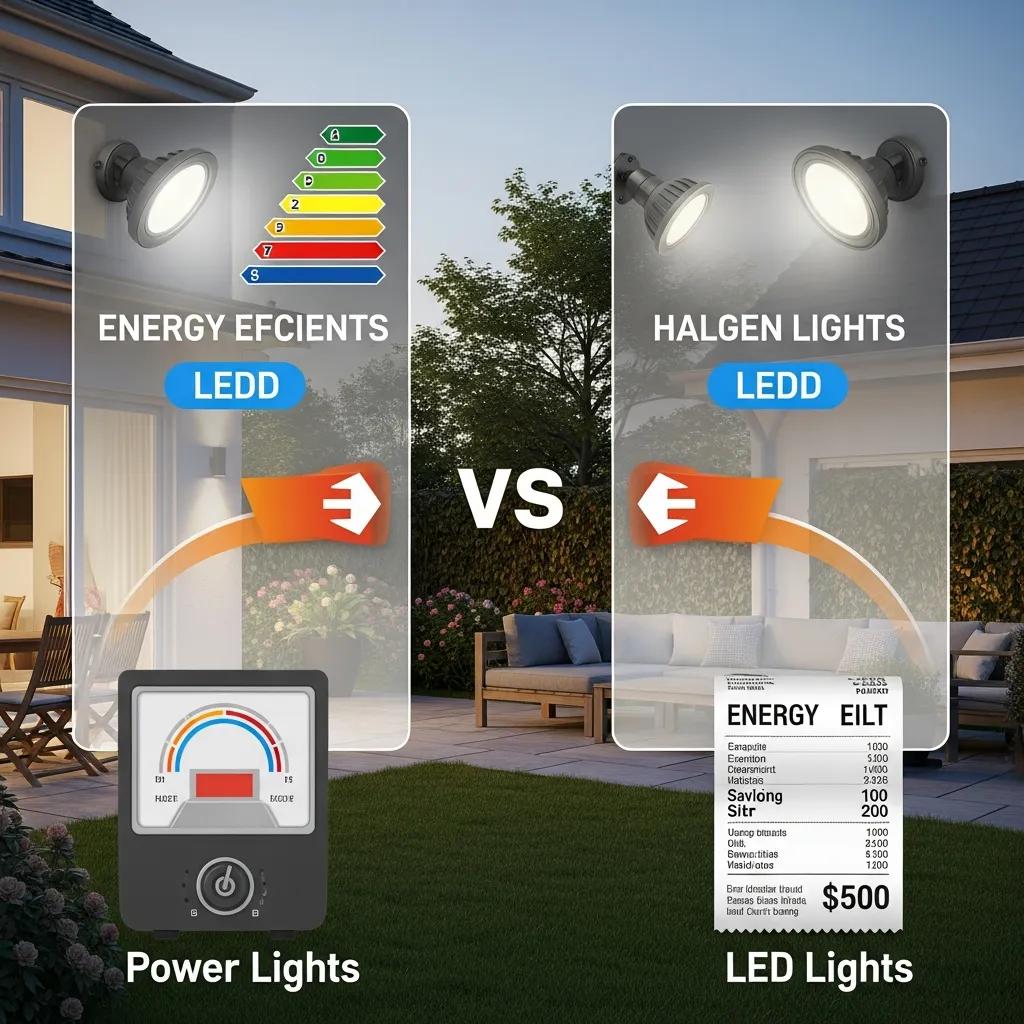
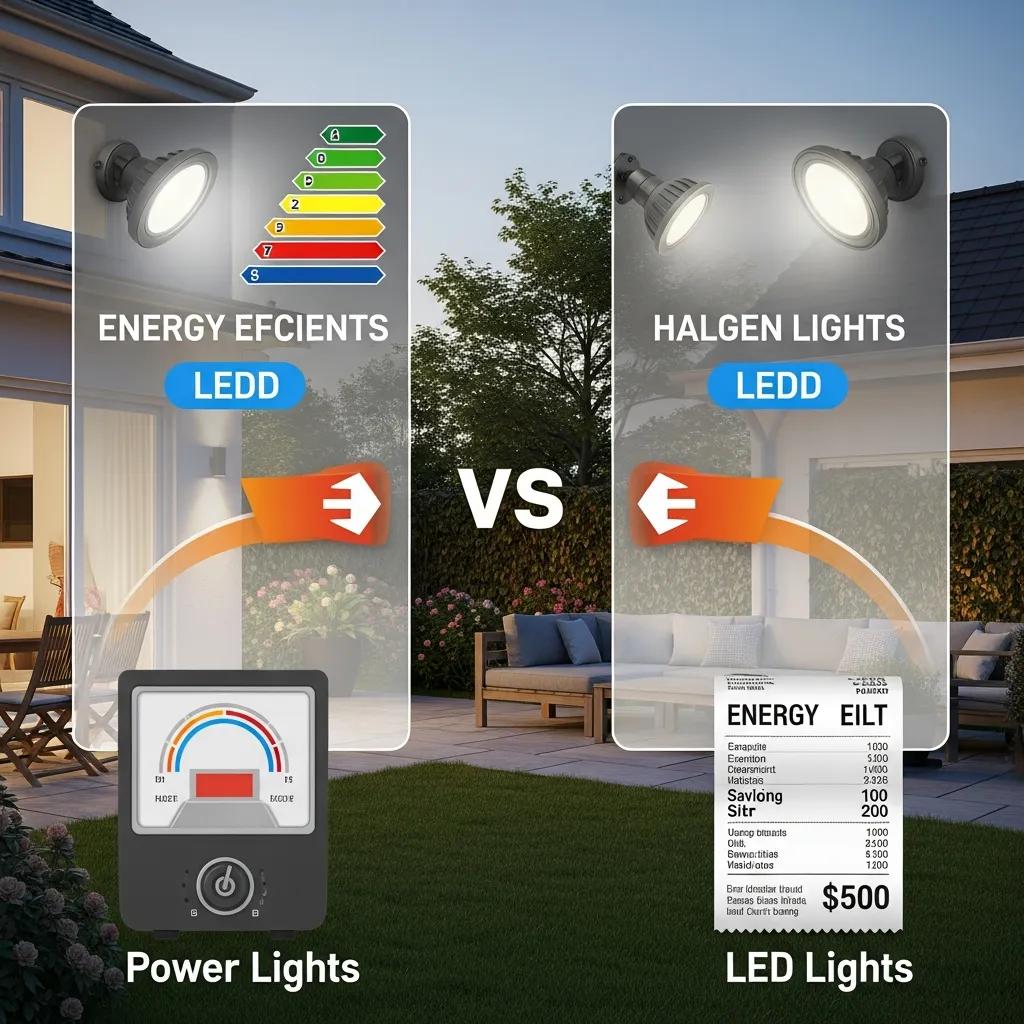
Outdoor lighting choices shape safety, curb appeal, and energy bills, so comparing LED and halogen technologies helps homeowners choose the best long-term option. This article explains the core technical differences, real-world performance, and cost trade-offs between LED outdoor lighting and halogen outdoor lighting so you can make an informed decision for your property. You’ll learn how energy efficiency, lifespan, light quality (lumens, CRI, and color temperature), durability (IP ratings and materials), and smart integration affect outcomes and costs over time. The guide also covers safety and environmental impacts, practical ROI calculations, climate-specific recommendations, and modern 2025 trends like cloud-managed controls and voice integration for smart home outdoor lighting. Where relevant, professional service considerations illustrate how design, installation, and maintenance influence total cost of ownership. Read on for side-by-side comparisons, actionable checklists, and clear scenarios for when to choose LED or halogen.
What Are the Key Differences Between LED and Halogen Outdoor Lighting?
LED and halogen outdoor lighting differ across energy use, lifespan, light quality, heat output, and durability because LEDs are solid-state devices while halogens are incandescent lamps that rely on heated filaments. LEDs convert a higher share of electrical energy into lumens, resulting in significantly lower wattage for the same visible output, whereas halogen bulbs produce more heat for the same lumen level. This efficiency difference affects operating cost and the practical placement of fixtures near vegetation or wooden structures, with LEDs reducing fire and material-degradation risks. The next section presents a concise technical comparison table to help you quickly scan key attributes before we dive into energy and lifespan specifics.
Different lighting attributes determine performance and homeowner outcomes:
| Technology | Key Attribute | Typical Value |
|---|---|---|
| LED | Lifespan | 25,000–50,000 hours |
| Halogen | Lifespan | ~2,000–4,000 hours |
| LED | Energy Use | Up to 75–80% less wattage than halogen for same lumens |
| Halogen | Heat Emission | High surface temperature; significant radiant heat |
| LED | Durability | Solid-state; often higher IP ratings |
| Halogen | Durability | Fragile glass; lower weather resistance |
This comparison highlights why LEDs are preferred for durable, low-maintenance outdoor installations, and it sets up a closer look at energy efficiency and lifespan next.
How Do LED and Halogen Lights Compare in Energy Efficiency?
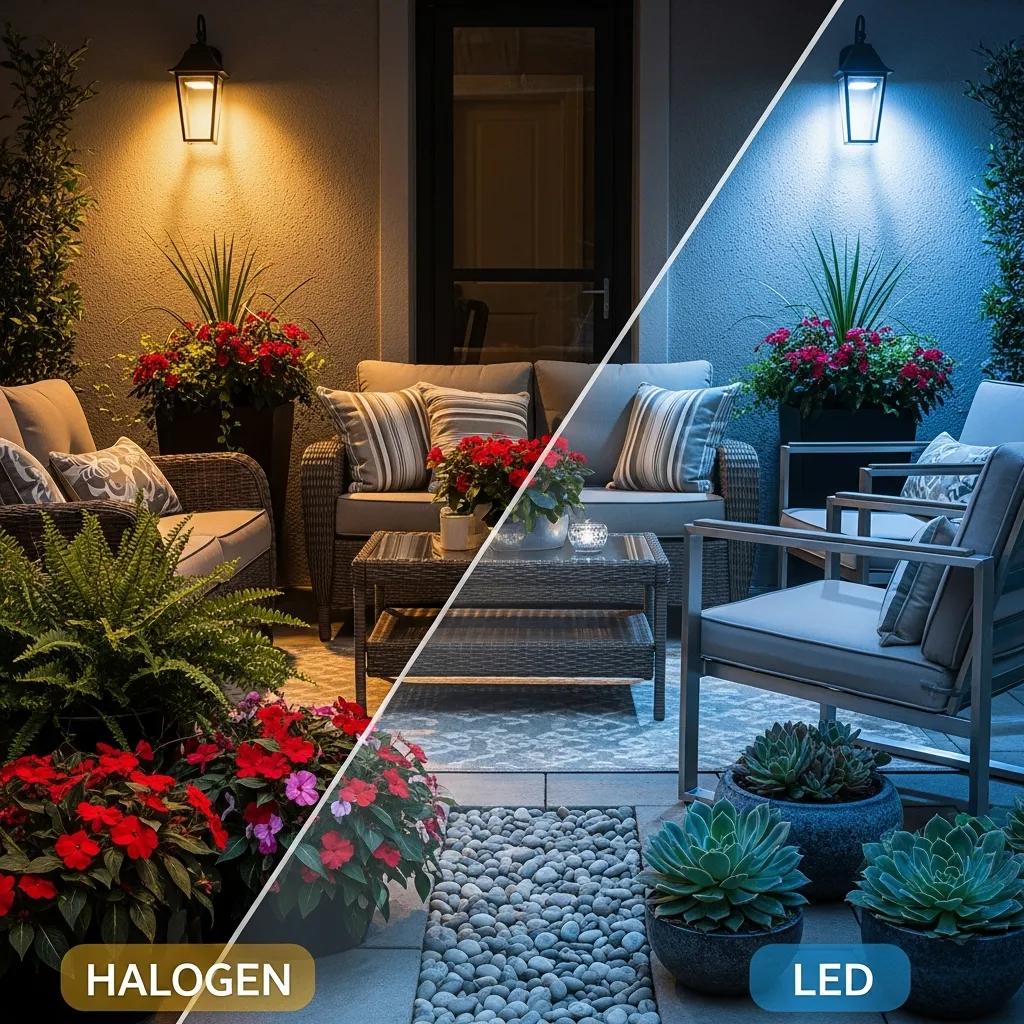
Energy efficiency measures how many lumens you get per watt and how much electricity the fixture consumes over time, and LEDs typically use about 75–80% less energy than halogen bulbs for comparable light output. For example, a path light that requires 300 lumens might run on a 4–6W LED but needs a 20–30W halogen, creating large kWh differences when multiplied by nightly use. Over a year, with 3 hours nightly use, replacing a 25W halogen with a 5W LED yields roughly (25W−5W) × 3h × 365 ≈ 21.9 kWh saved per fixture, translating to noticeable bill reductions across multiple fixtures. Recent studies and industry data in 2025 continue to show LED energy advantages, and that energy delta also lowers carbon footprint and supports sustainable landscape lighting decisions.
LED vs. Halogen Airport Lighting: Energy Efficiency and Cost Savings This study investigates the performance, energy efficiency, and economic impact of halogen versus LED runway edge lights at West Java International Airport. Utilizing theConstant Current Regulator(CCR) and Cost Benefit Analysis (CBA) methods, the research highlights the advantages of LED lighting systems, which include superior energy efficiency, longer lifespan, and faster responsiveness. The findings reveal that adopting LED lights significantly reduces operational and maintenance costs while enhancing flight safety and environmental sustainability. Furthermore, the transition to LED lighting offers long-term financial benefits for airports by minimizing energy consumption and maintenance demands. Energy Consumption Comparison of Halogen and LED Runway Lighting: Case Study at West Java International Airport, RS Hadikusuma, 2025
What Is the Lifespan of LED vs Halogen Outdoor Lights?
Lifespan is a function of component durability and operating stress, and LEDs typically last 25,000–50,000 hours while halogen bulbs commonly run for roughly 2,000–4,000 hours before failing. LED longevity depends on driver quality, thermal management, and duty cycle; poor heat dissipation or cheap drivers shorten life, whereas quality Luxury LED Lighting solutions maintain lumen output longer. Halogen life is limited by filament wear and glass envelope degradation, which increases replacement frequency and maintenance costs. Understanding these differences helps homeowners plan replacement schedules and quantify maintenance savings when considering durable outdoor lighting solutions.
What Are the Advantages of LED Outdoor Lighting for Your Home?
LED outdoor lighting delivers energy savings, long lifespan, enhanced light quality, low heat emission, and advanced smart compatibility, all of which combine to lower lifecycle costs and improve outdoor ambiance. As solid-state devices, LED fixtures integrate well with low-voltage systems and modern smart lighting controls — supporting dimming, color temperature tuning, and app or voice control for more dynamic outdoor lighting design. Environmentally, LEDs reduce energy-related emissions and avoid mercury or problematic disposal issues associated with some older lamp types, contributing to sustainable landscape lighting.
Below is a compact EAV table showing homeowner-relevant LED attributes, followed by use-case guidance and design notes that lead to installation choices.
| Feature Category | Attribute | Typical Value/Capability |
|---|---|---|
| Smart Compatibility | Controls | Dimmable, app control, voice integration |
| Color Options | Range | 2200K–5000K color temperatures available |
| Environmental | Impact | Lower energy use, reduced CO2 emissions |
| Durability | Weatherproofing | Common IP65+ fixtures for outdoor use |
This table demonstrates how LED feature sets enable both practical savings and modern functionality; the next subsection explains how LED lighting enhances ambiance.
How Does LED Lighting Enhance Outdoor Ambiance and Light Quality?
LED fixtures offer precise control over color temperature and high-CRI options, enabling layered lighting strategies that combine path, accent, and wash lighting to create depth and warmth. For paths and walkways, warm white in the 2700K–3000K range provides comfortable contrast and visual guidance, while accent or feature lighting can use 3000K–3500K to draw attention to architectural details without appearing harsh. High CRI LEDs (90+ where available) render plant and material colors more naturally than older lamp types, improving nighttime aesthetics and security camera compatibility. These design choices support both functional illumination and pleasing ambiance, and professional visualization tools make it easier to preview layered schemes before installation.
Why Is LED Lighting More Durable and Weather-Resistant Than Halogen?
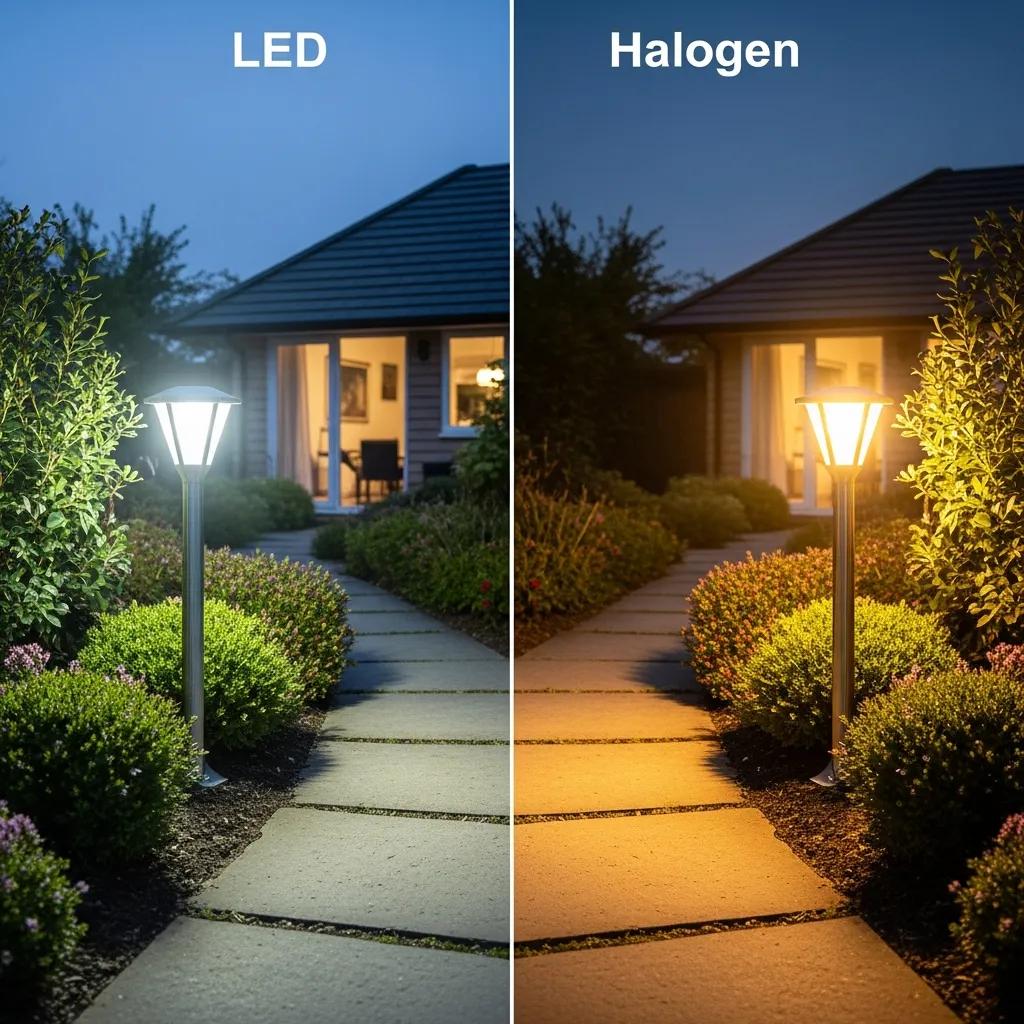
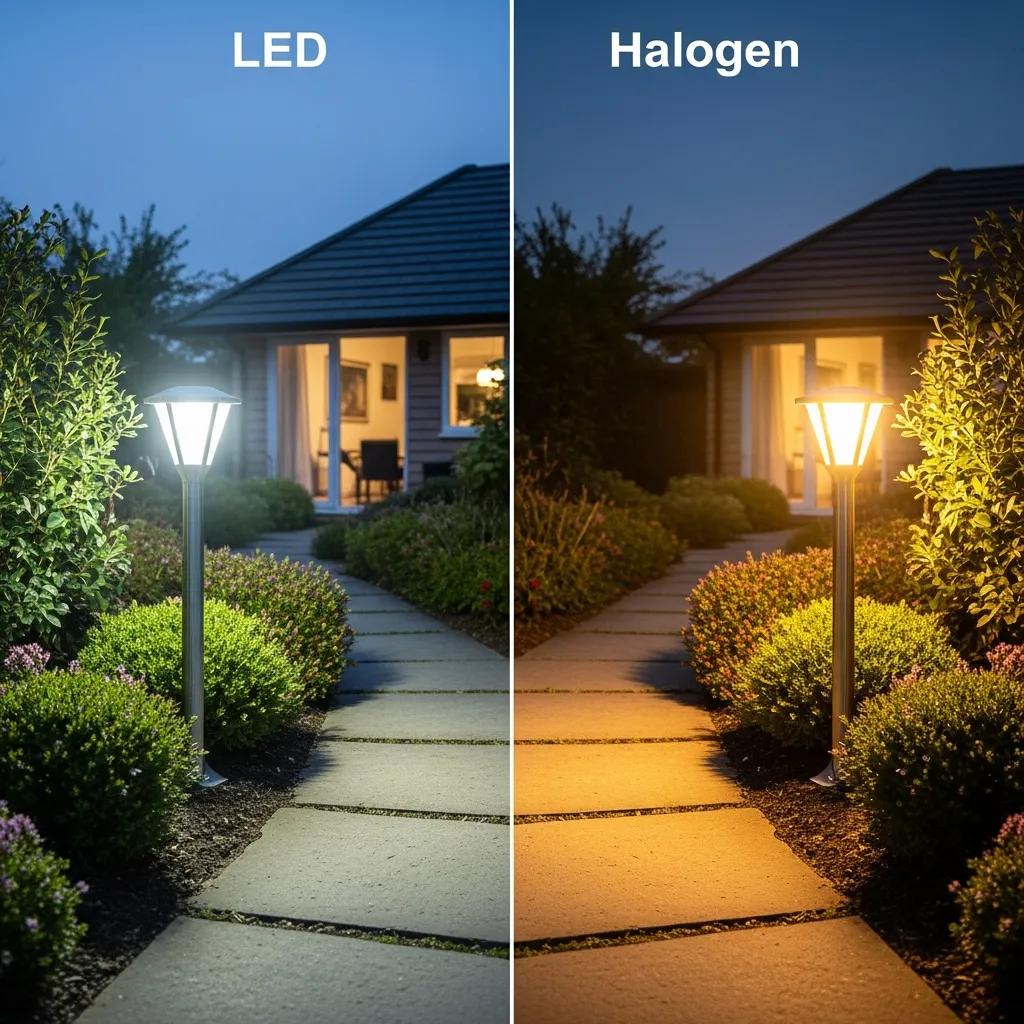
LED fixtures use solid-state components and rugged housings rather than delicate glass envelopes, enabling higher IP ratings and better resistance to moisture, dust, and temperature swings common in outdoor environments. Robust thermal design in quality fixtures keeps driver temperatures lower and prevents premature lumen depreciation, while low surface heat reduces stress on gaskets and fixture materials. In practice, choosing fixtures with IP65 or higher and corrosion-resistant materials minimizes failure risk and reduces service calls. Durable LEDs therefore translate to fewer replacements and less lifecycle waste, which supports sustainable landscape lighting practices and lowers maintenance burdens over time.
What Are the Disadvantages of Halogen Outdoor Lighting?
Halogen outdoor lighting is inexpensive upfront but carries significant drawbacks including low energy efficiency, short lifespan, high heat emission, and greater environmental impact. Because halogens emit a large portion of their energy as heat, they pose higher safety risks near vegetation and combustible materials and can accelerate the deterioration of fixture seals and landscape materials. The need for frequent replacement increases lifecycle costs and labor, while higher electricity use raises operating expenses and carbon footprint.
Key halogen drawbacks include:
High energy consumption compared with modern LED options, increasing long-term costs.
Short operational lifespan that requires frequent bulb replacements and higher maintenance.
High heat output that raises safety risks and can damage surrounding materials.
Lower weather resistance and fragile glass construction that reduce durability outdoors.
These limitations explain why LEDs are now the default for most outdoor lighting installations, and the next section details specific heat and safety concerns.
What Are the Safety and Heat Emission Risks of Halogen Lights?
Halogen bulbs operate at high filament temperatures, producing substantial radiant heat that can burn foliage, scorch mulch, or ignite organic debris if improperly installed close to landscape material. Surface temperatures on halogen fixtures often exceed safe-touch thresholds, which is a concern for pathways or areas accessible to pets and children. Safe installation requires increased clearances, heat-resistant housings, or protective guards, all of which add to installation complexity and cost. Understanding these risks helps homeowners and professionals choose safer placement strategies or opt for low-heat LEDs to minimize fire and burn hazards.
How Does Halogen Lighting Impact Energy Costs and Environmental Sustainability?
Because halogen lamps consume more power for similar lumen output, operating multiple fixtures increases household energy use and related carbon emissions; this effect is magnified in properties with extensive landscape lighting. Frequent halogen replacements generate more waste and higher embodied energy from producing replacement bulbs over time, while the higher kWh usage contributes to a larger lifecycle carbon footprint. Regulatory trends and market pressures in 2025 increasingly favor low-energy options, which reduces the long-term viability of halogen-heavy systems for homeowners aiming for sustainable landscape lighting. Next, we examine how these performance differences affect total cost of ownership and ROI.
How Do the Costs of LED and Halogen Outdoor Lighting Compare Over Time?
Over time, LED outdoor lighting is generally more cost-effective despite higher upfront fixture and driver prices because lower energy use and far fewer replacements reduce total cost of ownership. Initial investment differences stem from richer electronics, thermal design, and integrated smart features in LED fixtures, but the energy savings and reduced replacement frequency typically produce a break-even horizon within a few years depending on usage. To illustrate, the following EAV table compares upfront and lifecycle cost attributes, then a worked example shows estimated annual savings and payback. After that, we’ll discuss how professional services and warranties influence lifecycle economics.
Cost attributes compared for homeowner budgeting:
| Technology | Attribute | Value/Example |
|---|---|---|
| LED | Annual energy cost | Lower by ~70–80% per fixture (depends on kWh rate) |
| Halogen | Replacement frequency | Every 1–2 years with moderate use |
| LED | Replacement frequency | Rare — often measured in decades at typical use |
| Halogen | Typical upfront cost | Lower per bulb, higher cumulative cost over time |
This comparison frames the ROI discussion that follows and explains why many homeowners choose LEDs to control long-term expenses.
What Is the Initial Investment Difference Between LED and Halogen Lighting?
Initial purchase and installation costs for LED fixtures are often higher because of integrated drivers, thermal management, and optional smart control hardware; high-quality Luxury LED Lighting fixtures command premium prices compared to basic halogen bulbs. However, upfront cost must be viewed alongside expected replacement cycles and energy use: halogen arrays may seem cheaper at purchase but require recurrent bulb replacements and potentially more frequent wiring or transformer work. Budgeting tips include prioritizing fixtures with sealed housings and robust drivers for outdoor use and considering staged upgrades to spread investment while capturing immediate energy savings. Understanding upfront differences sets expectations for the payback analysis.
How Do Long-Term Energy Savings Affect Overall Cost Efficiency?
Long-term energy savings significantly reduce lifetime operating costs and can yield a payback period commonly in the 2–6 year range depending on fixture count, nightly hours, and local electricity rates, making LED the more efficient financial choice over a typical lighting system lifecycle. For example, swapping ten 25W halogen fixtures for 5W LED equivalents and assuming 3 hours nightly use and a $0.15/kWh rate results in annual savings on the order of several hundred dollars, which accumulates and offsets the higher initial spend. Additionally, reduced replacement frequency cuts labor and disposal costs, and warranties or maintenance plans can further lower lifecycle risk. Next we’ll show how a professional service model affects these lifecycle costs and homeowner risk.
When Should You Choose LED or Halogen Outdoor Lighting?
Choosing between LED and halogen depends on use-case, climate, budget timing, and whether you plan to integrate smart controls; for most homeowners in 2025, LED is the default choice for permanent installations because of its energy efficiency, durability, and compatibility with smart home outdoor lighting integration. Halogen may still be considered in very narrow, temporary, or niche applications where high initial brightness for a short period is required, or when upfront budget is extremely constrained — but those scenarios are increasingly rare. Below is a numbered decision checklist to guide practical selection, followed by short use-case descriptions that professionals use when advising homeowners.
Decision checklist for selecting outdoor lighting:
Choose LED if you want long-term energy savings, lower maintenance, and smart control compatibility.
Consider halogen only for temporary installations or specific niche applications with short duty cycles.
Prefer fixtures with IP65+ ratings in climates with heavy rain or snow to ensure durability.
Opt for warm color temperatures (2700K–3000K) for paths and mixed temperatures for layered design.
This checklist helps homeowners map priorities to technology selection, and the following subsections describe typical situations favoring each option.
In What Situations Is LED Outdoor Lighting the Best Choice?
LED is best for long-term, permanent landscape lighting such as pathway illumination, architectural washes, accenting trees and water features, and security floodlighting because it combines low energy use, robust weather resistance, and smart home outdoor lighting integration like app control and voice interfaces. LEDs perform well across most climates when fixtures are specified with appropriate IP ratings and thermal design; cold performance is generally reliable, and warm-start drivers mitigate dimming issues in very low temperatures. For homeowners focused on sustainability, LEDs reduce operational emissions and fit dark-sky-compliant designs through precise optics. When planning a system, professional visualization and layered design enhance both function and aesthetic outcomes.
Are There Specific Scenarios Where Halogen Lighting Is Still Preferred?
Halogen lighting is occasionally preferred for short-term events, theatrical accent lighting, or when a specific incandescent spectral quality is required for photography or temporary installations, but these are niche cases and come with trade-offs in safety and operating cost. In rare snow-melt or ice-mitigation systems halogen’s higher radiant heat has historically been used, but modern electric or hydronic approaches and specialized heating products often replace halogen for safety and efficiency reasons. Given the availability of Luxury LED Lighting options that mimic warm incandescent tones, most homeowners are better served by choosing high-quality LED fixtures and consulting a professional for edge-case scenarios.
How Can Blingle! Help You Choose and Install the Best Outdoor Lighting?
Blingle! offers specialized design, installation, and maintenance services for outdoor lighting systems and emphasizes Luxury LED Lighting combined with advanced visualization technology to preview and customize designs for residential and commercial properties.
As a premier outdoor lighting service provider, Blingle! focuses on year-round installations across landscape, permanent, holiday, patio, event, and commercial lighting, delivering solutions that integrate energy-efficient LED fixtures and smart control capability. The company’s service model includes design, installation, and maintenance to streamline total cost of ownership and reduce homeowner effort, and their World-Class Service and Worry-Free Guarantee aim to provide ongoing support and reliability. Read on for details about what makes their approach distinctive and how their guarantee reduces lifecycle risk for homeowners.
What Makes Blingle!’s Luxury LED Lighting Solutions Unique?
Blingle!’s Luxury LED Lighting offerings pair high-end fixtures with visualization technology so homeowners can preview layouts, color temperatures, and layered scenes before installation, helping avoid common design regrets. By combining energy-efficient LED components with aesthetic-focused fixture selection, the service model supports both beautiful nighttime ambiance and lower lifecycle costs. Visualization technology enables clients to see design options in context, which streamlines decision-making and ensures the final installation matches the intended look and function. This design-first approach demonstrates how professional services can translate LED technical advantages into superior real-world outcomes.
How Does Blingle!’s Worry-Free Guarantee Ensure Peace of Mind?
Blingle!’s Worry-Free Guarantee is presented as a support mechanism that reduces homeowner risk by covering ongoing maintenance and service needs, which minimizes unexpected replacement and repair costs over the system’s life. A comprehensive maintenance plan paired with installation quality and world-class service reduces lifecycle uncertainty and ensures fixtures perform at expected luminous and weatherproofing levels. For homeowners assessing total cost of ownership, such guarantees shift the economics by lowering the time and cost burden of upkeep and providing predictable service outcomes. If you prefer professional support, a design-and-maintain model like this helps convert LED efficiency into real savings and convenience.
Professional Design: Blingle! provides visualization technology to illustrate design options before installation.
Complete Installation: The company handles fixture placement, wiring, and system commissioning.
Ongoing Support: Blingle!’s Worry-Free Guarantee and maintenance reduce lifecycle surprises.
These service elements show how combining technical LED benefits with a robust service offering improves long-term homeowner satisfaction and system performance.
Frequently Asked Questions
What are the environmental impacts of using LED versus halogen outdoor lighting?
LED outdoor lighting is significantly more environmentally friendly than halogen lighting. LEDs consume up to 75-80% less energy, which translates to lower carbon emissions over their lifespan. Additionally, LEDs do not contain hazardous materials like mercury, which is found in some older lighting technologies. The longer lifespan of LEDs also means less waste, as fewer bulbs need to be replaced over time. In contrast, halogen lights contribute to higher energy consumption and more frequent waste due to their shorter lifespan, making them less sustainable overall.
Can LED outdoor lights be used in extreme weather conditions?
Yes, LED outdoor lights are designed to withstand extreme weather conditions. Many LED fixtures come with high Ingress Protection (IP) ratings, such as IP65 or higher, which indicates their resistance to dust and water. This makes them suitable for use in various climates, including heavy rain, snow, and extreme heat. Additionally, the solid-state design of LEDs means they are less likely to break or fail in harsh conditions compared to fragile halogen bulbs, ensuring reliable performance year-round.
How do I choose the right color temperature for my outdoor LED lighting?
Choosing the right color temperature for outdoor LED lighting depends on the desired ambiance and functionality. For pathways and general outdoor areas, a warm white light (2700K-3000K) creates a welcoming atmosphere. For accent lighting or highlighting architectural features, a neutral white (3000K-4000K) can enhance visibility without being harsh. Cooler temperatures (4000K-5000K) are often used for security lighting, as they provide a brighter, more alert environment. Consider the specific use case and the mood you want to create when selecting color temperatures.
What maintenance is required for LED outdoor lighting?
LED outdoor lighting requires minimal maintenance compared to halogen fixtures. Regular checks for dirt and debris on the fixtures can help maintain optimal light output. If the fixtures are installed in areas prone to moisture, ensure that seals and gaskets are intact to prevent water ingress. While LEDs have a long lifespan, it’s advisable to monitor their performance and replace any that show signs of dimming or failure. Overall, the low maintenance needs of LEDs contribute to their cost-effectiveness over time.
Are there any specific installation considerations for LED outdoor lighting?
When installing LED outdoor lighting, consider the fixture's IP rating to ensure it is suitable for outdoor use. Proper placement is crucial; fixtures should be positioned to avoid direct exposure to heavy rain or snow accumulation. Additionally, ensure that the electrical components are compatible with LED technology, as some older systems may require upgrades. Using a qualified electrician for installation can help ensure that all safety standards are met and that the lighting system operates efficiently.
What are the potential drawbacks of using LED outdoor lighting?
While LED outdoor lighting has many advantages, there are some potential drawbacks to consider. The initial cost of LED fixtures can be higher than halogen options, which may deter some homeowners. Additionally, if not chosen carefully, some lower-quality LEDs may produce harsh light or have poor color rendering. It's essential to select high-quality products from reputable manufacturers to avoid these issues. Lastly, while LEDs are durable, improper installation or exposure to extreme conditions can still lead to failures, so professional installation is recommended.
Conclusion
Choosing the right outdoor lighting technology can significantly enhance your home's safety, aesthetic appeal, and energy efficiency. LED lighting stands out for its long lifespan, lower energy consumption, and smart compatibility, making it a sustainable choice for modern homeowners. By understanding the differences between LED and halogen options, you can make an informed decision that aligns with your needs and budget. Explore our range of LED lighting solutions today to elevate your outdoor spaces.