

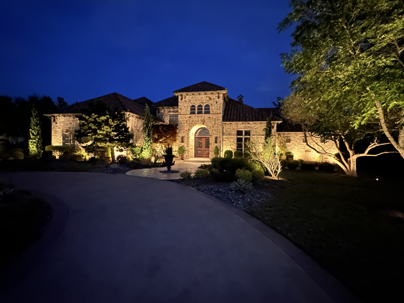
Why Outdoor Lighting Matters for Home Security and Safety
When people think about home security, they often jump straight to alarm systems and cameras. But one of the simplest and most effective tools you have is good outdoor lighting. Professionally planned lighting doesn’t just make your home look more inviting—it can also make it much less attractive to intruders and much safer for everyday use.
Authorities and security experts consistently list lighting as a core part of home security and safety:
- The U.S. Department of Justice’s “Operation Identification” and residential security guides highlight exterior lighting at doors, windows, and vulnerable areas as a basic crime‑prevention step for homes.
- The U.S. Department of Energy’s solid‑state lighting resources note that appropriate outdoor lighting can enhance both security and safety by improving visibility around buildings and walkways.
- Neighborhood Watch and community policing programs across the U.S. regularly include adequate exterior lighting as a key recommendation for deterring burglary.
- Local professionals—such as Blingle of Plano, an expert outdoor lighting company in the DFW area—regularly design lighting plans focused specifically on security and safety, as well as enhancing the look of your home at night.
Why Outdoor Lighting Matters for Security
1. Increases visibility
Well‑lit entry points—doors, windows, and pathways—make suspicious activity easier to notice, both for you and your neighbors. Crime‑prevention agencies repeatedly recommend lighting all entry points so intruders are “exposed” rather than hidden in shadows.
2. Removes hiding spots
Shadows near shrubs, fences, and corners provide natural cover. Lighting reduces those hiding places, which can be enough to persuade an intruder to move on. The U.S. DOJ’s home‑security materials specifically advise using lighting to illuminate “secluded spots” and “obscured entryways.”
3. Creates a sense of occupancy
Smart lighting that turns on automatically or varies through the evening can make it look like someone is always home, even when you’re away. Burglary‑prevention guidance from police departments often suggests using timers or smart lights to simulate occupancy during vacations.
Why Lighting Matters for Safety
Outdoor lighting isn’t just about keeping criminals away; it also protects the people who live in and visit your home:
- Reduces trips and falls by illuminating steps, uneven surfaces, and walkways.
- Improves visibility for drivers backing out of or pulling into your driveway.
- Makes hazards easier to spot, such as wet leaves, ice, or garden tools left out.
Government and insurance safety guidelines often group “exterior lighting” alongside handrails and non‑slip surfaces as basic measures to reduce injuries around the home.
Key Areas to Light for Better Security and Safety
You don’t need to flood your entire property with light. Focus on strategic zones that security and safety guidelines frequently highlight:
1. Front Entrance and Porch
- Light your main door, sidelights, and porch area.
- Ensure the lock and door‑handle area are clearly visible.
- Consider fixtures on both sides of the door or a fixture above it.
2. Back and Side Doors
- Back doors are common entry points for burglars.
- Use motion‑activated lights near all secondary entrances.
- Make sure they’re bright enough to cover the doorway and at least a few feet beyond.
3. Driveway and Garage
- Illuminate the driveway, garage doors, and the path from the car to the house.
- Motion‑activated or dusk‑to‑dawn lights work well here.
- If you have a detached garage, treat it like a secondary entry point.
4. Pathways and Walkways
- Use low‑level path lights along walkways and steps.
- This helps visitors (and you) avoid trips and falls and removes dark approach routes.
5. Dark Corners and Hidden Areas
- Look for shadowy spots: behind sheds, along fences, under decks, or near large shrubs.
- A simple, well‑placed floodlight or motion‑sensor light can eliminate these blind spots.
- If you’re unsure where light is needed most, a Blingle of Plano lighting designer can walk the property with you to identify security weak points and suggest fixture placement.
Balancing Security, Comfort, and Neighbor Friendliness
Security lighting doesn’t have to make your home feel like a parking lot. You can design a plan that’s both safe and welcoming:
- Use layers of light: softer path lights plus brighter, targeted security lights.
- Avoid shining lights directly into neighbors’ windows or across the street.
- Consider shielded or down‑facing fixtures to reduce light pollution.