

Pergola Lights: A Complete Guide to Choosing the Best Outdoor Lighting
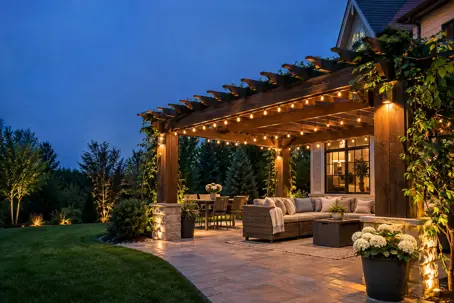
A pergola light is an outdoor lighting fixture installed on or around a pergola to provide illumination after dark. Pergola lighting makes the structure safer to use in the evening, highlights the beams and posts, and adds atmosphere for gatherings.
Outdoor lighting has become a priority in yard design. In fact, the Houzz Outdoor Living Trends Report shows that more than 70 percent of U.S. homeowners view outdoor lights as a top feature in their ideal backyard. With demand for outdoor lighting at an all-time high, pergola fixtures have shifted from being decorative accents to essential elements of many a backyard.
Choosing the right lights allows a pergola to function as both a centerpiece and a comfortable extension of the home at night.
Types of Pergola Lights
Pergola lights come in several styles, including string lights, lanterns, LED strips, recessed fixtures, spotlights, and hanging pendants. Each pergola light creates a distinct effect, for example, string lights add a warm glow while recessed fixtures give more focused illumination.
The following pergola lighting ideas highlight what each option offers and how it can shape the look and feel of your pergola.
String Lights
String lights are strands of bulbs hung across beams or posts, often sold in 24–48+ foot lengths with bulbs spaced 6–12 inches apart. String lights also known as bistro, party, market, or café lights and are one of the easiest pergola lighting styles to set up. Most people now choose LED strands since they use 75% less energy and last up to 25 times longer than incandescent bulbs.
Installing string lights is straightforward. The strands can plug directly into a standard outdoor outlet, connect to a solar panel, or run off a battery pack. Hanging string lights usually takes less than an hour with basic hardware such as cup hooks, zip ties, screw eyes, or a guide wire for added support.
- Lighting effect: A warm, soft glow that creates a relaxed mood for evenings outdoors.
- Daytime look: String light cords are usually black or white, with clear versions also available if you want them to blend in. String lights add a casual, festive touch even before the lights are switched on.
- Best for: Pergola string lights uick, budget-friendly setups that create a café-style atmosphere for dinners, gatherings, or late-night conversations.
Lantern Lights
Lantern lights are enclosed fixtures that hang from beams, mount on posts, or sit on side tables to give a pergola both light and style. Most outdoor lanterns use metal frames with glass panels, which shield the bulb and protect it from rain or wind.
Lanterns come in wired, solar, or battery-powered designs. Wired fixtures provide steady brightness but require a safe connection to an outdoor circuit. Solar lanterns can glow for about 6 to 10 hours after a full charge, while battery lanterns are portable and easy to move but need regular replacement or charging. Mounting is usually simple with a hook, chain, or bracket, and freestanding lanterns can be placed without hardware.
- Lighting effect: A soft, focused pool of light (similar to candlelight) that works well for dining tables, pathways, or cozy corners under the pergola.
- Daytime look: Lanterns are decorative even when switched off. Lantern lights often feature rustic ironwork, brushed steel, or colored glass. Lanterns fit easily into vintage, farmhouse, or boho-inspired designs, acting as both light sources and ornaments.
- Best for: Homeowners who want their pergola lighting to double as décor, adding old-world charm or eclectic style while giving just enough brightness for tables and cozy corners
LED Strip Lights
LED strip lights are thin, flexible strips lined with small diodes that can be mounted along pergola beams, rafters, or edges. An LED strip sits flush to the surface, which makes the lighting almost invisible until it turns on. Many strips include adhesive backing or mounting clips, so installing LED strips only takes a few minutes.
Outdoor LED strips are built for long service life. According to the U.S. Department of Energy, well-designed LED luminaires can operate for 25,000 hours or more before brightness decreases noticeably. That level of durability makes outdoor LED strips a reliable option for homeowners who want lighting that lasts for years without frequent replacement.
Most outdoor LED strips are dimmable, and many include color-changing features controlled by a remote or smartphone app. Outdoor LED strips can connect to low-voltage wiring, or integrate with smart systems for scheduled on/off times.
- Lighting effect: A sleek, even glow that outlines the pergola and highlights architectural lines without visible fixtures.
- Daytime look: Slim and discreet, LED strips hide under beams or ledges and remain out of sight until illuminated at night.
- Best for: Homeowners who prefer a modern, minimalist style and want flexible features like dimming or color control without cluttering the pergola with visible hardware.
Recessed Lights
A recessed light is a fixture mounted inside a pergola beam, ceiling panel, or overhead structure so the bulb sits flush with the surface. Only the trim ring or lens of the recessed light is visible, giving a built-in look instead of a hanging fixture.
For wood pergolas, the recessed light housing is set into a cutout in the beam or panel. For aluminum or vinyl pergolas, recessed lights often require compatible housings or pre-drilled panels supplied by the manufacturer.
Outdoor recessed lights must meet the right protection level. The U.S. Department of Energy notes that recessed lights installed under a covered pergola can use IP44, while recessed lights directly exposed to rain should be rated IP65 or higher.
Installing recessed lights takes more work than hanging strands or lanterns. Recessed lights need cutouts in timber, housings fitted into place, and wiring that connects to an outdoor circuit. Most pergolas will need a licensed electrician for this step, since proper wiring and waterproof seals are important for safety.
- Lighting effect: Even, functional overhead light that brightens tables or central areas without showing the fixture.
- Daytime look: A slim trim that blends into the pergola surface and keeps the frame uncluttered.
- Best for: Pergolas where a streamlined design is essential, and permanent, built-in lighting is needed.
Spotlights or Floodlights
A spotlight or floodlight is a fixture that directs light onto a specific part of the pergola or the space around it. A spotlight produces a narrow beam for focused lighting, while a floodlight spreads a wide wash of light across larger areas.
LED spotlights and floodlights give steady illumination and reduce energy costs compared to halogen bulbs. Adjustable heads also make the spotlights easy to aim the beam at a dining table, a walkway, or the posts and beams of the pergola itself.
Installing spotlights or floodlights usually means attaching a bracket to a post or beam, or setting a fixture in the ground nearby. The wiring connects to an outdoor-rated circuit, and some models can link to smart controls for easier use.
- Lighting effect: Bright, directed light that adds visibility and highlights features.
- Daytime look: Fixtures stay visible and can look more industrial than decorative, but smaller spotlights can blend in.
- Best for: Security lighting, pergolas that need task lighting for cooking or entertaining, or for showcasing beams, posts, or nearby landscaping at night.eatures, or landscaping near your pergola.
Pendant or Chandelier Lights
Pendant or chandelier lights hang from the beams of a pergola and act as a centerpiece. Pendant fixtures look similar to indoor dining lights but are built for outdoor use with weather-resistant finishes and wiring.
Pendant and chandelier lights must be securely fastened to the pergola frame so the structure can hold their weight. The fixture should also hang high enough to leave comfortable clearance for people walking or sitting underneath.
Most pendant and chandelier lights are hardwired. An electrician can connect the fixture to an existing patio lighting circuit or place it on a separate switch for more control. Battery and solar-powered pendants exist, but they are less common and provide shorter run times.
- Lighting effect: Focused overhead light that creates a natural gathering point, especially above dining or seating areas.
- Daytime look: Decorative hardware that becomes a bold, visual feature of the pergola, even before the light is turned on.
- Best for: Pergolas used as outdoor dining rooms or entertaining spaces where a central fixture makes the area feel finished and intentional.
How to Choose the Right Pergola Lights
The right pergola lights depend on the size and layout of the structure, the purpose you want the space to serve, the level of weather exposure, and the power options available.
A large pergola with tall rafters often needs brighter fixtures, while a smaller frame works well with simple strands or a few lanterns. Detached pergolas work well with solar or battery-powered lights, while wired options suit pergolas close to the house. The next points break down what matters most when selecting pergola lights.
Pergola Size & Layout
The size and shape of a pergola determine both how many lights you need and which types make sense. A small pergola under 10×10 feet usually works with one or two strands of string lights or a single pendant above a table. A medium pergola around 12×12 feet often works best with two or three strands draped in a grid, or a mix of strands and one central fixture. Large pergolas 16×20 feet and bigger need layered lighting—string lights or LED strips for overall glow, plus pendants, recessed lights, or spotlights above task areas (like dining tables).
Beam height is also important when picking lights for your pergola.
Shorter pergolas under 8 feet usually suit string lights, strips, or recessed lights that stay close to the frame. Taller pergolas can handle pendants or chandeliers without blocking movement underneath.
Wide beam spacing makes string lights sag more, which may mean extra strands, while close beams let you tuck in recessed or strip lights for a clean finish.
A simple way to plan pergola landscape lighting is to sketch your pergola and mark tables, seating, and walkways. Sketching your pergola area lets you see where you need broad ambient light versus focused task light, and helps prevent dark patches.
Intention
Your choice of pergola lights depends on what you want the space to do. Dramatic and bold or cozy and comfortable? Different lighting complements different moods. Use the guide below to match your goal with the right type of lighting.
| Intention | Best options | Brightness (lumens) | Color temperature | Effect |
|---|---|---|---|---|
| Relaxing atmosphere | String lights, lanterns | 100–300 per bulb | Warm white 2700K–3000K | Creates a cozy, inviting glow |
| Dining and entertaining | Pendant lights, chandeliers, LED strips | 400–700 | Neutral white 3500K–4000K | Clear visibility for meals and gatherings |
| Highlighting features | Spotlights, uplights | Varies by feature | Warm or neutral depending on mood | Aim beams at plants, bar, or pergola posts |
| Flexibility | LEDs with dimmers or smart controls | Adjustable | Adjustable | Switches between bright and soft settings |
| Safety and navigation | Step lights, recessed fixtures, sconces | Moderate brightness | Neutral white | Keeps paths, stairs, and pool edges safe |
Outdoor Durability
Pergola lights need to withstand rain, wind, dust, and sun. Look for the IP rating (Ingress Protection) printed on the pergola lighting product. The first number on the IP rating shows resistance to solids like dust, and the second shows resistance to water. For a covered pergola, IP44 pergola lights are usually enough. For an open pergola structure, IP65 pergola lights are a safer choice because it is dust tight and resists water jets. If the pergola is near a pool or fountain, go higher with IP67.
Durability also depends on the housing and finish. Powder-coated aluminum or stainless steel holds up better outdoors than basic plastic. Light lenses made of tempered glass or polycarbonate can also resist cracking and fading better.
| Standard | Best rating/range for pergolas | What it means |
|---|---|---|
| IP (Ingress Protection) | IP44 for covered pergolas, IP65 for open pergolas, IP67 near pools or fountains | First digit = dust protection (0–6). Second digit = water protection (0–9). Higher numbers mean stronger protection. Example: IP65 is dust tight and resists water jets. |
| IK (Impact Protection) | IK08–IK10 | Measures resistance to mechanical impact (like hail, bumps, or thrown objects). IK10 is the highest, meaning protection from strong impacts. |
| UV Resistance | Look for “UV-resistant” or “UV stabilized” certification | Ensures plastic covers and finishes do not yellow, crack, or fade under sunlight exposure. |
| Material Rating | Stainless steel (304/316) or powder-coated aluminum | Materials resist corrosion, rust, and weather damage better than untreated steel or basic plastics. |
| Warranty / Testing Standard | Minimum 3–5 year outdoor warranty; IEC 60529 (IP) compliance stated | Confirms the light has been tested under international durability standards and is backed by the manufacturer. |
Power Source Options
When planning pergola lighting, think about how the lights will be powered. If the pergola is far from the house or lacks nearby outlets, your options may be limited. Each power source has its pros and cons.
Solar-powered lights are popular for pergolas that get plenty of sun during the day. They charge automatically and cost nothing to run, though performance drops on cloudy days and in shaded spots.
Battery-operated lights give flexibility because you do not need wiring, but they require regular battery changes or recharging. They work well for accent lighting but may not be practical for large spaces.
Hardwired lighting connects directly to your home’s electrical system. This option is reliable, bright, and works with most fixture types. Installation is more involved and usually requires an electrician, but it ensures steady power.
Smart or Wi-Fi-enabled lighting can be solar, battery, or hardwired. The key feature is remote control through an app or voice assistant. This makes it easy to set timers, dim lights, or change colors without touching a switch.
Here’s a table to help you decide what pergola power source to gowith:
| Power source | Best for | Pros | Cons |
|---|---|---|---|
| Solar-powered lights | Pergolas in sunny areas, off-grid setups | No wiring needed, low running cost, eco-friendly | Performance drops on cloudy days or in shaded yards; batteries may need replacement after 2–3 years |
| Battery-operated lights | Temporary setups, renters, small pergolas | Easy to install, portable, no need for outlets | Frequent battery changes, less bright than wired options |
| Hardwired electric lights | Permanent installations, larger pergolas | Bright and reliable, can power multiple fixtures, works with switches and dimmers | Requires professional installation, higher upfront cost |
| Smart/Wi-Fi-enabled lights | Tech-savvy users, flexible control | Remote control with phone or voice, scheduling, dimming, integration with home systems | Needs Wi-Fi coverage, usually more expensive, some still require a wired or solar power base |
How to Install Pergola Lights
A complete pergola light installation project means sketching a layout, running wiring, making sure every fixture has the right IP rating, and mounting lights in ways that stand up to weather.
It is not only about hanging strands across beams but also about meeting electrical codes, using weatherproof equipment, and choosing the right mounting hardware. The U.S. Department of Energy and the National Electrical Code both stress the importance of outdoor-rated fixtures, GFCI outlets, and IP-certified protection against water and dust.
A mistake with wiring, placement, or load balance can quickly turn your dream pergola setup into a serious electrical hazard—and void warranties.
That said, knowing the main steps to installing pergola lights helps you understand the process and speak with confidence when working with a professional. The outline below shows the key stages of pergola light installation and what to keep in mind at each one.
- Plan the layout
Measure the pergola and sketch a diagram of where the lights should go. Confirm how the pergola lights will be powered—plug-in, solar, battery, or hardwired—since this choice affects both design and installation. Mark where outlets, switches, or solar panels will go to avoid surprises later.
- Check safety requirements
Use lighting fixtures rated for outdoor use. Covered pergolas usually need IP44 protection, while open structures should use IP65 or higher. Weatherproof cables, junction boxes, and GFCI outlets are essential to meet code and protect against moisture and electrical faults.
Common safety mistakes to avoid:
- Hanging indoor-rated lights outdoors where moisture causes shorts
- Skipping GFCI outlets, leaving the system vulnerable to shock hazards
- Overloading one circuit with too many fixtures
- Using cheap plastic clips that crack or let water in
- Ignoring safe distances from water features like pools and fountains
- Skipping professional installation for hardwired or custom setups
- Running wires loosely without proper strain relief
- Use the right mounting methods
Different types of lights need different techniques.
- String lights should be hung on hooks or supported by guide wires.
- Strip lights should be clipped into channels for a clean look.
- Pendants and chandeliers need heavy-duty brackets anchored into load-bearing beams.
- Spotlights and uplights should be fixed to posts or set at ground level to highlight key features.
- Think about placement and layering
Lighting placement shapes both style and function. Perimeter lights create a soft frame, zig-zag patterns add brightness, and a central pendant defines a dining zone. Combining ambient string lights, task lighting for tables, and accent spotlights creates layers that make the pergola flexible for different occasions. - Consult a professional
Because pergola light installation involves electricity, structural weight, and weatherproofing, even small mistakes can have serious consequences. A licensed electrician or lighting installer will ensure the system meets code, the load is balanced, and the final design is both safe and attractive.
Blingle professionals can help you with the tricky parts of your pergola lighting. Blingle handles everything—from design sketches and fixture selection to safe hardwiring and polished mounting—so your pergola looks great and performs for years. Instead of risking a DIY setup, find a Blingle location and let a dedicated team bring your plan to life.
Brighten Your Backyard with Blingle!
Pergola lights turn an ordinary structure into a centerpiece for evening relaxation, dining, and entertaining.
While some setups seem simple, even string lights require safe mounting, outdoor-rated wiring, and the right IP protection. More advanced options—like hardwired fixtures, dimmers, and custom designs—add complexity that you do not want to handle alone.
For homeowners who want secure installation, custom designs, and lighting that performs for years, professional help is the smartest option. Blingle’s outdoor lighting specialists design, mount, and make sure your pergola lights meet safety codes, while creating a custom look that suits your space.
The result is a pergola you can enjoy every evening without worrying about wiring or weather damage.
If you are ready to start your lighting project, find a Blingle location near you and let our team help you create your dream pergola.